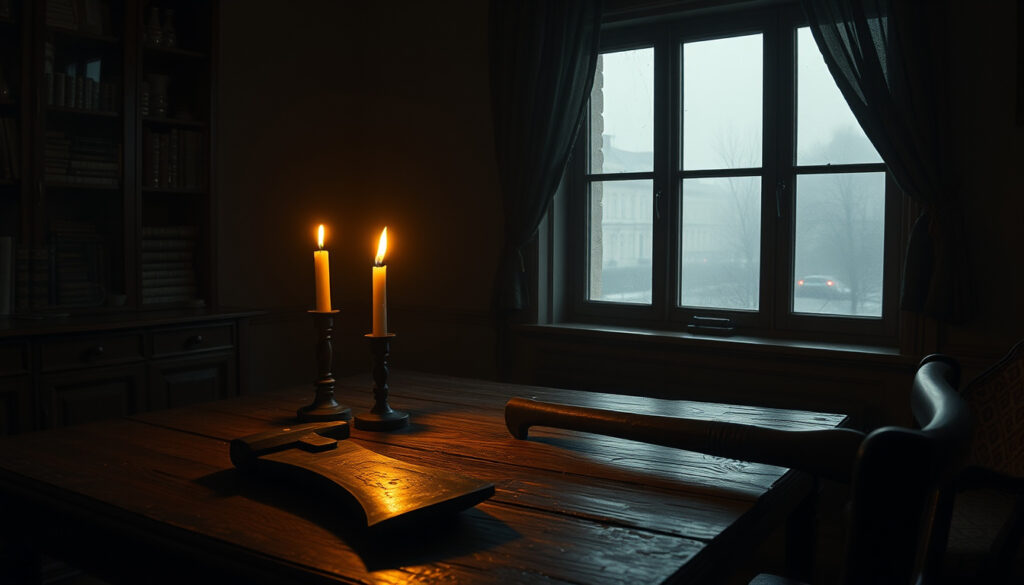
Crime and Punishment: Plot, Summary, Quotes & Reading Guide
Few novels have lodged themselves in the cultural conscience quite like Fyodor Dostoevsky’s psychological thriller about a man who reasons his way into murder. Published in 1866, Crime and Punishment drops readers into the cramped apartments and icy streets of Saint Petersburg, watching one man’s conscience consume him from the inside out. If you’ve ever been curious about what makes a classic “unputdownable” — or whether you can handle the intensity — here’s your complete guide.
Author: Fyodor Dostoevsky · Publication Year: 1866 · Protagonist: Rodion Raskolnikov · Setting: Saint Petersburg · Genre: Psychological novel
Quick snapshot
- Exact page numbers for quotes vary by translation and edition
- Precise in-novel dates beyond “1860s Saint Petersburg” are approximate
- Danilov murders moneylender January 12, 1866 — just weeks after novel’s first installment (Origins OSU)
- Assassination attempt on Tsar Alexander II on April 4, 1866 during serialization (Origins OSU)
- Novel remains required reading in literature curricula worldwide
- Continued film adaptations reimagine the story for new audiences
| Label | Value |
|---|---|
| Author | Fyodor Dostoevsky |
| Original Title | Prestuplenie i nakazanie |
| First Published | 1866 (serial) |
| Page Count | Approximately 550–600 |
What is Crime and Punishment even about?
At its heart, Crime and Punishment is a study in guilt — what happens to a person who believes they are clever enough to commit a crime and escape the consequences. The novel follows Rodion Raskolnikov, a destitute former university student who conceives a plan to murder Alyona Ivanovna, a merciless pawnbroker he views as a parasite bleeding the city’s poor (BookRags). Raskolnikov struggles with thoughts of murder for nearly a month before committing the act, convinced that exceptional individuals stand above conventional morality.
Plot overview
The story unfolds across the damp streets of Saint Petersburg, a city founded in 1703 that had become the imperial capital by the 1860s (Course Hero). Raskolnikov is so impoverished that he can barely afford the rent, yet he harbors grandiose theories about “extraordinary men” who may transgress moral laws for the greater good. After killing the pawnbroker and accidentally murdering her sister Lizaveta as well, Raskolnikov finds himself unable to escape the psychological torment he expected to avoid.
Main characters
- Rodion Raskolnikov — The impoverished protagonist whose theories lead him to murder
- Sonya Marmeladova — A virtuous young woman forced into prostitution who becomes Raskolnikov’s moral compass
- Porfiry Petrovich — The clever detective who suspects Raskolnikov without proof
- Svidrigailov — A mysterious aristocrat whose own conscience leads to his undoing
The implication: Dostoevsky doesn’t merely tell a crime story — he dissects the psychology of guilt itself, showing how Raskolnikov’s intellect becomes both his weapon and his prison.
What is the summary of Crime and Punishment?
The novel divides roughly in half: in the first three parts, Raskolnikov is rational, proud, and convinced of his own superiority; in the final three parts, his psychological defenses crumble (Wikipedia). This shift is where the book’s real power lies.
Part 1 summary
Raskolnikov first encounters Marmeladov in a tavern, learning of his family’s desperate poverty. He visits their cramped apartment, where he meets Sonya, and begins planning the murder. After weeks of deliberation, he bludgeons Alyona Ivanovna with an axe, only to kill Lizaveta when she unexpectedly returns. Raskolnikov’s fractured mind immediately begins splintering in all directions — the cold calculator and the romantic idealist torn apart simultaneously (SuperSummary).
Key events
- Detective Porfiry Petrovich begins interrogating Raskolnikov, using psychological pressure rather than evidence
- Svidrigailov appears, manipulating those around him before meeting his own fate
- The climax occurs when Raskolnikov confesses the murders to Sonya, who urges him to turn himself in (LitCharts)
- Raskolnikov accepts Sonya’s wooden cross as a symbol of his path toward redemption (SuperSummary)
What this means: The confession is not an act of defeat but a breakthrough — Raskolnikov discovers that intellectual pride was the real barrier between himself and human connection.
Is Crime and Punishment difficult to read?
Honest answer: yes, but not for the reasons most people fear. The prose is dense and the cast of characters is large, but the emotional through-line — guilt, fear, redemption — is immediately accessible (GradeSaver).
Reading challenges
- Long paragraphs with minimal dialogue in places
- Russian names with multiple nicknames for the same character
- Philosophical digressions on morality and religion
- Approximately 550–600 pages depending on translation
Tips for beginners
Start with the Constance Garnett translation if possible — it’s the most widely available and establishes the canonical English style. Reading the first 100 pages as a “test” helps you decide whether to commit.
Online communities like Reddit’s r/books offer discussions and chapter breakdowns for those who get stuck. The complexity of themes is exactly what makes the novel worth reading slowly — each chapter reveals new psychological layers.
The catch: Dense reading requires patience, but Dostoevsky rewards rereading. Most readers find the first 150 pages the hardest, then the momentum carries them through.
What is the famous line from Crime and Punishment?
The novel is laced with quotable passages that capture its psychological intensity. Among the most discussed:
“What a deed I’m planning, and yet I’m letting pointless little things terrify me!” (SuperSummary, page 38, Part 1)
“It takes something more than intelligence to act intelligently.” (The Joyous Living)
“Society is too well protected by its punishments.” (Raskolnikov, via SparkNotes literary analysis)
Iconic quotes
Dostoevsky’s statements on morality cut to the core of the novel’s philosophy. The quote about intelligence and action resonates beyond the text — it suggests that knowledge without moral courage is incomplete. Raskolnikov possesses the former but lacks the latter.
What this means: The novel argues that conscience is not an intellectual problem to be solved but a moral weight to be carried. Intelligence may justify actions to ourselves, but only moral action can redeem us.
Can a 14 year old read Dostoevsky?
This is one of the most common questions in literary forums, and the answer depends entirely on the individual reader. The novel has been banned in places for its depiction of violence and sexuality, yet it remains standard curriculum in many high schools worldwide.
Age appropriateness
- The violence, while intense, is less graphic than modern crime fiction
- Sexual content is implied rather than explicit
- Philosophical themes may require maturity to appreciate fully
Content warnings
Fourteen-year-olds who enjoy character-driven stories can handle the pacing, but those expecting action may struggle. The novel’s value lies in its psychological depth — a teenager who connects with Raskolnikov’s internal conflict gains real insight into guilt and moral choice.
For motivated teen readers, the book can be genuinely formative. Many adults report that their first encounter with Dostoevsky in adolescence shaped their understanding of literature and morality permanently.
The implication: Age is less relevant than reading maturity. A 14-year-old who reads voraciously will likely engage more deeply than a disinterested adult.
Upsides
- Enduring literary masterpiece that rewards rereading
- Explores timeless themes of guilt, morality, and redemption
- Character psychology remains relevant to modern readers
- Film adaptations available for visual learners
Downsides
- Dense prose requires patience
- Large cast of Russian characters can confuse
- Victorian-era pacing by modern standards
- Philosophical digressions may frustrate action-seekers
Crime and Punishment asks a question every generation must answer: What happens when we believe our intelligence excuses our actions? For readers willing to sit with discomfort, the payoff is one of literature’s most powerful moral explorations.
Related reading: Cast of Knives Out 2 – Complete Glass Onion Cast Guide · The Number 23 – Enigma, Origins and Cultural Impact
Dostoevsky’s profound examination of guilt and redemption in Crime and Punishment finds a Victorian parallel in the Dr Jekyll and Mr Hyde analysis, probing humanity’s darker impulses.
Frequently asked questions
Who wrote Crime and Punishment?
Fyodor Dostoevsky authored the novel in 1866. He had returned from 10 years of Siberian exile before writing it, and his experiences clearly informed the novel’s psychological depth and themes of suffering and redemption.
What are the main themes of Crime and Punishment?
The novel explores guilt, redemption, morality, nihilism, and human nature. Dostoevsky uses Raskolnikov’s story to examine whether intellectual superiority can override moral conscience.
How many pages is Crime and Punishment?
The novel runs approximately 550–600 pages depending on the translation and edition. Modern paperback editions typically fall in this range.
What movies adapt Crime and Punishment?
Several film adaptations exist, including Soviet productions and modern retellings. Directors frequently update the setting while preserving the psychological core of the original story.
Why was Crime and Punishment banned?
The novel has faced bans or restrictions in various locations due to its depiction of violence, its critique of societal structures, and philosophical content deemed controversial at different periods.
What is Dostoevsky’s view on morality?
Dostoevsky believed morality could not be reduced to intellectual rationalism. Through Raskolnikov’s suffering, he argues that conscience operates independently of reason — guilt is felt, not calculated.
Is there a PDF of Crime and Punishment?
Various translations are available through public domain sources and digital libraries. The Constance Garnett translation, published in the early 20th century, is among those in the public domain.
More related posts
 RSVP Dating Site – Complete 2025 Review Guide
 What Is PAYG? Pay As You Go Tax Explained for Australia
 Phil Rudd: What Happened, His AC/DC Status, and Now
 Mac DeMarco on Anxiety, Alcoholism, and Sobriety
 Karan Aujla: Marriage, Net Worth, Citizenship, Attack
 Martin Bryant: verified facts about the Port Arthur massacre
 COP to AUD Exchange Rate: 100, 1000, 76000, 52000 Pesos
 Vanilla Ice Today: Career, Net Worth, and Controversies in 2025
