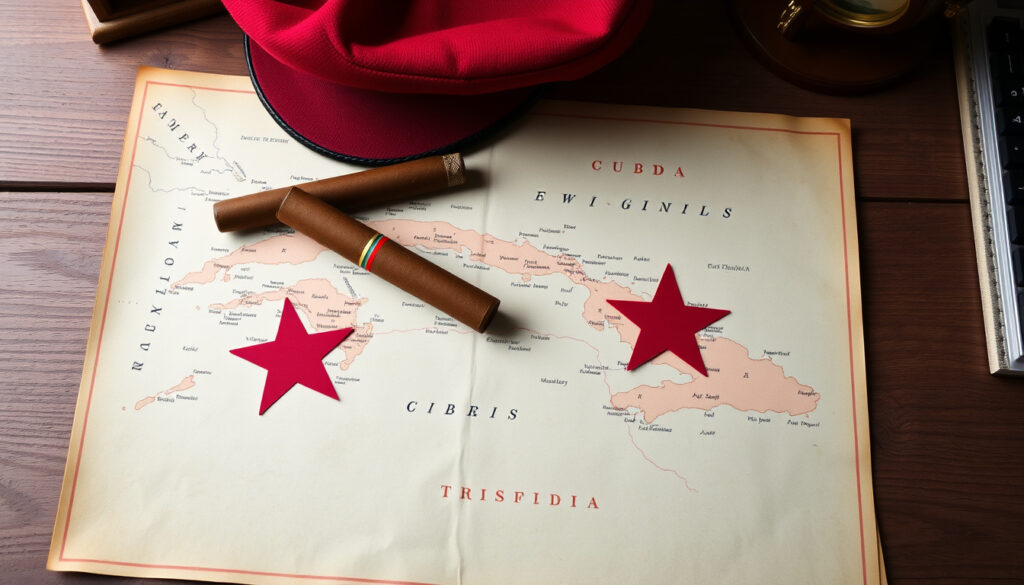
Che Guevara: Biography, Revolution, Death & Legacy
Few faces are as instantly recognizable as Che Guevara’s — printed on T-shirts, posters, and protest signs across the globe. But behind the iconic photograph lies a far messier story: an Argentine doctor who became a Marxist guerrilla, helped overthrow a Cuban government, and was executed in a Bolivian schoolhouse before his image was turned into a billion-dollar brand.
Full name: Ernesto “Che” Guevara de la Serna ·
Born: June 14, 1928, Rosario, Argentina ·
Died: October 9, 1967, La Higuera, Bolivia ·
Nationality: Argentine ·
Known for: Key figure in the Cuban Revolution ·
Iconic image: Guerrero Heroico photograph
Quick snapshot
- Born in Rosario, Argentina, on June 14, 1928 (Encyclopaedia Britannica (reference work))
- Key commander in the Cuban Revolution, 1956–1959 (Encyclopaedia Britannica (reference work))
- Executed on October 9, 1967, in Bolivia (PBS American Experience (U.S. public broadcaster))
- Exact last words are disputed (Encyclopaedia Britannica (reference work))
- Full extent of Irish ancestry not fully documented (Encyclopaedia Britannica (reference work))
- Conflicting accounts on who ordered his hands removed (Encyclopaedia Britannica (reference work))
- Revolutionary career spanned just over a decade (1955–1967) (PBS American Experience (U.S. public broadcaster))
- Wounded in the attack before capture (Encyclopaedia Britannica (reference work))
- Remains returned to Cuba in 1997 (PBS News (U.S. public broadcaster))
- His legacy remains polarizing: revolutionary hero to some, authoritarian symbol to others
- Continued academic debate on his economic policies in Cuba
Six key biographical facts capture the essentials of Guevara’s life — from his birth in Argentina to his death in Bolivia.
| Label | Value |
|---|---|
| Full name | Ernesto “Che” Guevara de la Serna |
| Born | June 14, 1928, Rosario, Argentina |
| Died | October 9, 1967, La Higuera, Bolivia |
| Nationality | Argentine |
| Occupation | Revolutionary, writer, guerrilla leader, diplomat |
| Known for | Cuban Revolution, Guerrero Heroico image |
The implication: these facts anchor the story of a man who crossed continents and ideologies.
Is Che Guevara half Irish?
Che Guevara had Irish ancestry on his mother’s side — his great-great-grandfather Patrick Lynch emigrated from Ireland to Argentina in the 18th century. The precise proportion is not fully documented, but family records confirm the lineage. The nickname “Che” itself comes from the common Argentine interjection used to call attention — similar to “hey” or “pal” in English.
Why was he called Che?
- Guevara frequently used the interjection “che” in conversation, so his comrades in Cuba began calling him by that name (Encyclopaedia Britannica (reference work)).
- It stuck and became the name the world remembers.
Where was Che Guevara born?
- He was born in Rosario, Argentina, to a middle-class family (Encyclopaedia Britannica (reference work)).
- His father was an architect and his mother came from a wealthy family.
The implication: Guevara’s Argentine origins and Irish heritage complicate the simple “Cuban revolutionary” label — he was a foreigner who adopted Cuba’s cause.
What did Che Guevara do to Cuba?
Guevara played a central role in the Cuban Revolution as a guerrilla commander alongside Fidel Castro. After the revolution succeeded in 1959, he held top posts: Minister of Industry and President of the National Bank. He helped implement socialist policies, including land reform and nationalization of industries (EBSCO Research Starters (academic database)).
What did Fidel Castro say about Che Guevara?
In his eulogy in October 1967, Castro called Guevara “an artist of revolutionary warfare” and praised his “absolute lack of scruples” in fighting imperialism — a phrase meant as high praise from a fellow revolutionary (Encyclopaedia Britannica (reference work)).
What was Che Guevara’s role in the Cuban Revolution?
- He was a key military commander, leading guerrilla columns that captured Santa Clara in December 1958, a decisive victory (PBS American Experience (U.S. public broadcaster)).
- After the revolution, he served as a roving ambassador and architect of Cuba’s new economic system.
Why this matters: Guevara’s role in Cuba wasn’t just military — he shaped the country’s economy and ideology for years after the fighting stopped.
Why is Che Guevara famous?
Che Guevara’s global fame rests on two pillars: his revolutionary actions and an iconic photograph. The image Guerrillero Heroico, taken by Alberto Korda on March 5, 1960, captured Guevara at a memorial service for victims of a ship explosion. It became a symbol of rebellion and anti-imperialism, reproduced on merchandise worldwide (PBS News (U.S. public broadcaster)).
Why is Che Guevara’s face so famous?
- Korda’s photograph is one of the most reproduced images in history — on posters, clothing, and murals.
- Its composition (a dramatic upward gaze, beret, and jacket) gave Guevara a romantic, defiant look.
- Marketing turned a revolutionary into a commodity.
What are some famous Che Guevara quotes?
- “Hasta la victoria siempre” (“Onward to victory always”) – his farewell letter to Fidel Castro.
- “Shoot, coward, you are only going to kill a man” – last words attributed to him at his execution.
The same man whose face sells T-shirts in malls was a Marxist who opposed capitalism. Consumers wearing his image often disagree with the very ideology he died for.
What this means: The image has outlived the man, and the commercialized symbol often overshadows the historical person.
Why was Che Guevara assassinated?
Guevara was captured by the Bolivian Army on October 8, 1967, at the Quebrada del Yuro ravine. The army received assistance from CIA advisers. The next day, he was executed by summary order — without trial — in the small town of La Higuera (PBS American Experience (U.S. public broadcaster)).
How did Che Guevara die?
- He was wounded in the leg during the fighting, captured alive, then shot dead by a soldier named Mario Terán on the orders of the Bolivian high command.
- His body was displayed to the press, then buried in a secret location.
Why did they remove Che Guevara’s hands?
- Bolivian officials severed his hands and preserved them in formaldehyde for fingerprint identification — to prove to the world that Che was really dead (Encyclopaedia Britannica (reference work)).
- The hands were later returned to Cuba and buried with his remains in 1997.
The U.S. government officially denies direct involvement in the killing, but CIA documents declassified later confirm the agency provided intelligence and training to the Bolivian unit that captured him.
The trade-off: The summary execution and the hand removal turned Guevara into a martyr. A trial might have produced a different legacy.
What were Che Guevara’s last words?
According to a schoolteacher present at his execution, Guevara’s last words were: “Shoot, coward, you are only going to kill a man.” However, alternate accounts exist — some say he said nothing, others report a different phrase. The exact words remain uncertain (Encyclopaedia Britannica (reference work)).
What was Che Guevara’s legacy?
- In Cuba, he is a national hero and his remains are interred in a mausoleum in Santa Clara.
- Globally, he symbolizes anti-imperialist struggle and rebellion.
- Critics point to his role in the execution of political opponents in Cuba’s post-revolution purges.
The implication: Even in death, Che Guevara remains a contested figure — a revolutionary martyr to some, a violent ideologue to others.
Timeline of key events
- June 14, 1928: Born in Rosario, Argentina (Encyclopaedia Britannica (reference work))
- 1948–1953: Studies medicine at University of Buenos Aires
- 1954–1956: Travels through Latin America, witnesses poverty
- 1956–1959: Participates in Cuban Revolution with Fidel Castro (PBS American Experience (U.S. public broadcaster))
- 1959–1965: Holds key government posts in Cuba (Minister of Industry, President of National Bank)
- 1965–1966: Leaves Cuba to spread revolution in Africa and Bolivia
- October 8, 1967: Captured by Bolivian Army in Quebrada del Yuro (PBS American Experience (U.S. public broadcaster))
- October 9, 1967: Executed; hands severed for identification (Encyclopaedia Britannica (reference work))
- October 12, 1997: Remains returned to Cuba, buried in Santa Clara (PBS News (U.S. public broadcaster))
The pattern: a revolutionary life compressed into less than 15 years of active combat and governance, followed by a martyr’s afterlife.
Clarity: Confirmed facts vs. what’s unclear
Confirmed facts
- He was executed on October 9, 1967, in La Higuera, Bolivia (Encyclopaedia Britannica (reference work))
- He was a key figure in the Cuban Revolution (Encyclopaedia Britannica (reference work))
- His iconic photograph was taken by Alberto Korda on March 5, 1960
- He was nicknamed “Che” due to his frequent use of the Argentine interjection (Encyclopaedia Britannica (reference work))
What’s unclear
- The exact wording of his last words is disputed (Encyclopaedia Britannica (reference work))
- The precise extent of his Irish ancestry is not fully documented
- Circumstances of the order to remove his hands have conflicting accounts
Quotes from key figures
“Shoot, coward, you are only going to kill a man.”
— Che Guevara, last words reported by schoolteacher present at his execution (Encyclopaedia Britannica (reference work))
“He was an artist of revolutionary warfare.”
— Fidel Castro, eulogy for Che Guevara, October 1967 (Encyclopaedia Britannica (reference work))
“I didn’t plan it — it just happened. That look, that expression, it was destiny.”
— Alberto Korda, reflecting on the moment he captured the Guerrero Heroico image
The pattern: Each quote reveals a different facet of Guevara — the defiant martyr, the praised comrade, the accidental icon.
Summary
Che Guevara’s life was short, intense, and deeply contradictory: a doctor who became a guerrilla, a minister who abandoned power, a martyr whose face sells merchandise. His story demands both the facts and the ambiguities, because Che cannot be reduced to a slogan.
westportlibrary.libguides.com, en.wikipedia.org, biography.com, arsof-history.org, youtube.com, ebsco.com, kids.britannica.com
Frequently asked questions
What was Che Guevara’s education?
He studied medicine at the University of Buenos Aires and graduated as a doctor in 1953 (EBSCO Research Starters (academic database)).
Did Che Guevara have children?
Yes, he had five children: four with his first wife Hilda Gadea, and one with his second wife Aleida March.
What is Che Guevara’s nickname and why?
His nickname “Che” comes from the Argentine interjection “che,” which he used frequently in conversation (Encyclopaedia Britannica (reference work)).
What did Che Guevara believe in?
He was a Marxist-Leninist who believed in armed revolution to overthrow imperialist regimes and establish socialist states (EBSCO Research Starters (academic database)).
How tall was Che Guevara?
He was approximately 5 feet 9 inches (175 cm) tall.
Did Che Guevara win any awards?
He was posthumously awarded the Order of the Caribbean Legion in 1968, among other honors. No major international prizes during his lifetime.
What books did Che Guevara write?
His most famous works are Guerrilla Warfare (1961), The Motorcycle Diaries (published posthumously), and Reminiscences of the Cuban Revolutionary War.
More related posts
 Kentia Palm Care: Victorian Parlor Palm for Low-Light Homes
 Big W Sunbury Guide: Store Hours, Contact Information & FAQs
 Guy Ritchie: Biography, Career, Personal Life, and Net Worth
 Vanilla Ice Today: Career, Net Worth, and Controversies in 2025
 Comparison Car Insurance Quotes – Save Hundreds Yearly
 Alan Joyce: What Happened After Qantas
 Convert 500 USD to AUD: Live Rates from Xe, Wise, Revolut
