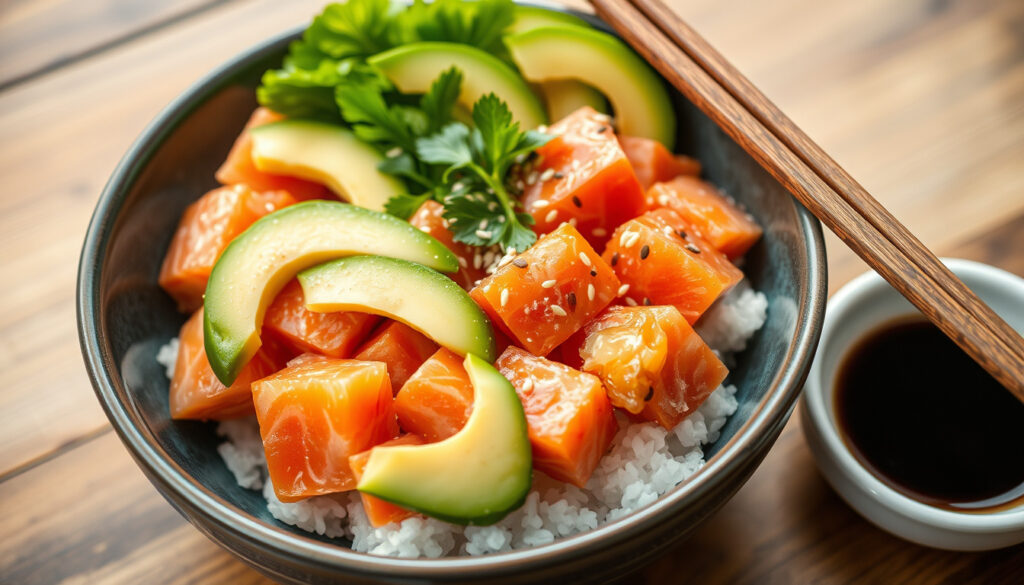
Poke Bowl Recipe: Ingredients, Base, and Mistakes to Avoid
There’s something about a well-assembled poke bowl that feels both indulgent and virtuous at the same time. The dish, which originated in Hawaii as a simple preparation of cubed raw fish seasoned with sea salt and seaweed (Go Hawaii (Hawaii Tourism Authority)), has become a canvas for endless creativity. This guide walks you through the key ingredients, the best base choices, and the most common mistakes to avoid—so your homemade poke bowl tastes as good as it looks.
Origin: Hawaii ·
Common protein: Ahi tuna ·
Common mistake: Using non-fresh fish
Quick snapshot
- Sushi rice is the classic base (RecipeTin Eats (recipe blog))
- Ahi tuna is the most common protein (Good Housekeeping (consumer magazine))
- Cooked shrimp or chicken can substitute (RecipeTin Eats (recipe blog))
- Avocado, cucumber, edamame, and seaweed are classic toppings (RecipeTin Eats (recipe blog))
- Soy sauce–based dressing is the foundation (Bon Appétit (food publication))
Two key facts, one pattern: the dish stays true to its Hawaiian roots while adapting to modern tastes.
| Attribute | Value | Source |
|---|---|---|
| Dish origin | Hawaii | Go Hawaii (Hawaii Tourism Authority) |
| Key ingredient | Sashimi-grade fish | Good Housekeeping (consumer magazine) |
What exactly is a poke bowl?
Origins of poke
The word poke means “to slice or cut” in Hawaiian (Hawaii Magazine (travel & culture publication)). Traditionally, Hawaiian fishermen would season fresh catch with sea salt, seaweed, and inamona (roasted candlenut) and eat it as a snack. As Go Hawaii (Hawaii Tourism Authority) notes, poke is a staple at nearly every local gathering or celebration.
Key characteristics
A poke bowl is essentially a raw-fish salad served over rice. Bon Appétit (food publication) describes it as a raw-fish salad that, when exported beyond Hawaii, evolved into a bowl format with rice and toppings like avocado and cucumber. Food & Wine (culinary magazine) confirms that modern versions include rice, fish, vegetables, and sauces in a restaurant-friendly presentation.
Poke’s simplicity is its genius: high-quality fish, minimal seasoning, and fresh toppings create a dish that’s greater than the sum of its parts. The bowl format made it a global hit without losing its Hawaiian soul.
What are the ingredients in a poke bowl?
Protein options
- Ahi tuna – the gold standard, prized for its firm texture and clean flavor (Good Housekeeping (consumer magazine))
- Salmon – a popular alternative, though not traditional (The Kitchn (home cooking site))
- Cooked shrimp or chicken – for those who prefer cooked protein (RecipeTin Eats (recipe blog))
- Tofu – a plant-based option that absorbs the marinade well (common knowledge, supported by many health blogs)
Base choices
- Sushi rice – short-grain rice seasoned with rice vinegar, sugar, and salt (RecipeTin Eats (recipe blog))
- Brown rice – higher in fiber, a healthier swap (general dietary guidance)
- Mixed greens – for a low-carb, keto-friendly base (common in health-conscious bowls)
Toppings and garnishes
Beyond protein and rice, a poke bowl is defined by its toppings. RecipeTin Eats (recipe blog) recommends avocado, cucumber, edamame, green onion, radish, carrot, and sesame seeds. Bon Appétit (food publication) adds that crunchy elements like fried shallots or macadamia nuts are common.
Sauces and seasonings
- Soy sauce – the backbone of the marinade (Bon Appétit (food publication))
- Sesame oil – adds nutty depth (RecipeTin Eats (recipe blog))
- Sriracha aioli – for heat and creaminess
- Rice vinegar – used in sushi rice and sometimes in the dressing
The interplay of protein, base, toppings, and sauce is where most home cooks go wrong. Overloading the bowl can mask the delicate flavor of fresh fish, while skimping on texture leads to a one-note experience.
What is the best base for a poke bowl?
Four base options, one trade-off: tradition versus dietary preference.
| Base | Texture | Nutritional profile | Best for |
|---|---|---|---|
| Sushi rice | Sticky, slightly sweet | High carb, moderate sugar (vinegar) | Authentic flavor, holds toppings well |
| Brown rice | Chewy, nutty | Higher fiber, lower glycemic index | Health-conscious eaters |
| Quinoa | Fluffy, light | High protein, gluten-free | Vegetarian/gluten-free diets |
| Mixed greens | Crisp, refreshing | Low carb, high volume | Keto/low-carb diets |
The Kitchn (home cooking site) notes that while sushi rice is traditional, many modern recipes adapt to dietary needs. The best base ultimately depends on your nutritional goals and whether you prioritize authenticity or health.
What toppings go on a poke bowl?
Fresh vegetables
- Avocado – creamy contrast to the fish (RecipeTin Eats (recipe blog))
- Cucumber – adds crunch and refreshment
- Edamame – boosts protein and fiber
- Cabbage or carrot – for extra crunch and color
Crunchy add-ins
Texture is key. Fried shallots, tempura crumbs, or macadamia nuts provide contrast to the soft fish and rice (Food & Wine (culinary magazine)).
Fruits
- Mango – adds sweetness, balances salty soy sauce
- Pineapple – tropical twist, common in fusion bowls
Seeds and nuts
- Sesame seeds – classic garnish
- Furikake – Japanese rice seasoning with sesame, seaweed, and bonito flakes
- Chopped macadamia nuts – adds buttery crunch
Too many toppings can overwhelm the fish. Stick to three or four toppings plus one crunchy element—any more and you’re making a salad, not a poke bowl.
What are some common mistakes when making poke?
Using non-fresh fish
This is the number one mistake. Good Housekeeping (consumer magazine) stresses that you must use sushi-grade ahi tuna. RecipeTin Eats (recipe blog) adds that fish suitable for raw eating includes kingfish, tuna, and sea bass.
Over-marinating
Marinating the fish too long changes its texture. RecipeTin Eats (recipe blog) warns: “Do not leave the tuna to marinate because it can become too salty and slightly cure, altering texture.” Marinate just before serving.
Incorrect rice preparation
Sushi rice needs care: cook as usual, then fold in a mixture of rice vinegar, sugar, and salt while fanning to cool (RecipeTin Eats (recipe blog)). Skipping the cooling step leads to mushy rice.
Ignoring health considerations
Poke bowls can be high in sodium from soy sauce and calories from rice and avocado. Hawaii Magazine (travel & culture publication) notes that traditional poke is a simple, low-calorie snack, but the bowl format can double the calorie count. If you’re watching sodium, use low-sodium soy sauce or decrease the soy sauce.
How to Make a Poke Bowl: Step-by-Step
Step 1: Prepare the sushi rice
Cook short-grain rice and while still hot, mix with a dressing of rice vinegar, sugar, and salt. Spread on a tray to cool to room temperature. This ensures the rice stays fluffy and seasoned (RecipeTin Eats (recipe blog)).
Step 2: Prepare the fish
Use sashimi-grade ahi tuna. Cut into bite-sized cubes (about 1 cm). If using other proteins like cooked shrimp or tofu, cut similarly.
Step 3: Make the marinade
Combine soy sauce, sesame oil, and a touch of rice vinegar. Optional: add sriracha or minced ginger. Toss the fish in the marinade just before assembling—do not let it sit longer than 5 minutes (RecipeTin Eats (recipe blog)).
Step 4: Assemble the bowl
Place a bed of rice in a bowl. Arrange the marinated fish, avocado slices, cucumber, edamame, and other toppings. Garnish with sesame seeds, green onion, and a drizzle of extra sauce.
Confirmed Facts and What’s Unclear
Confirmed facts
- Poke is a traditional Hawaiian dish (Go Hawaii (Hawaii Tourism Authority))
- Raw fish is a primary ingredient (Bon Appétit (food publication))
- Sushi rice is common base (RecipeTin Eats (recipe blog))
What’s unclear
- Optimal marination time: sources disagree on 5 vs 20 minutes
- Health impact of high-sodium sauces: no long-term studies on poke specifically
- Authenticity of modern variations: whether the bowl format represents true Hawaiian poke is debated
Expert Perspectives
Poke is a raw-fish salad. The bowl format popularized outside Hawaii often includes rice plus toppings such as avocado and cucumber.
Bon Appétit (food publication)
Do not leave the tuna to marinate because it can become too salty and slightly cure, altering texture.
RecipeTin Eats (recipe blog)
Our tuna poke bowl is easy to make at home in just three steps and recommends sushi-grade ahi tuna.
Good Housekeeping (consumer magazine)
Summary
A great poke bowl starts with fresh, sashimi-grade fish and a well-seasoned rice base. The three biggest pitfalls—over-marinating, poor rice texture, and using low-quality fish—are all avoidable with the right technique. For the home cook in the United States, the choice is clear: source the best tuna you can find, keep the marinade brief, and balance your toppings. Your taste buds (and your waistline) will thank you.
Frequently asked questions
Can I use frozen fish for poke?
Yes, as long as it has been previously frozen to kill parasites. Many sushi-grade fish is flash-frozen on the boat. Thaw in the refrigerator and use immediately.
What is the best rice for a poke bowl?
Sushi rice (short-grain) is traditional and holds together best. Brown rice, quinoa, or mixed greens are popular alternatives for dietary needs.
Is poke bowl safe during pregnancy?
Raw fish carries a risk of listeria and parasites. Pregnant women should consult their doctor, but many choose to avoid raw fish entirely or use fully cooked proteins.
How to store leftover poke?
Poke is best eaten immediately. If you must store leftovers, keep the fish and rice separate, refrigerate, and consume within 24 hours. The fish will lose texture.
What can I substitute for soy sauce?
Tamari (gluten-free), coconut aminos (lower sodium), or ponzu (citrusy) work well. For a different flavor, try miso paste thinned with rice vinegar.
Can I make poke bowl vegan?
Absolutely. Use tofu, tempeh, or mushrooms as the protein. Marinate in soy sauce and sesame oil, and load up on vegetables and seaweed.
What is the difference between poke and sashimi?
Sashimi is thinly sliced raw fish served solo. Poke is cubed raw fish marinated and served with rice, toppings, and sauce—a composed dish.
More related posts
 Idris Elba: Biography, Knighthood, Conviction & Family
 Pandora Charms Ireland: Buy Authentic Charms Online
 Ricki-Lee Coulter: Biography, Net Worth, Weight Loss, Family
 Sally Bretton: Husband, Children, Illness & Career – Facts 2025
 Frieren Beyond Journey’s End – Seasons Episodes Streaming Guide
 Jon Voight: Career, Family Feud with Jolie, Trump Support
 Jeffrey Dahmer: Biography, Crimes, and Trial
