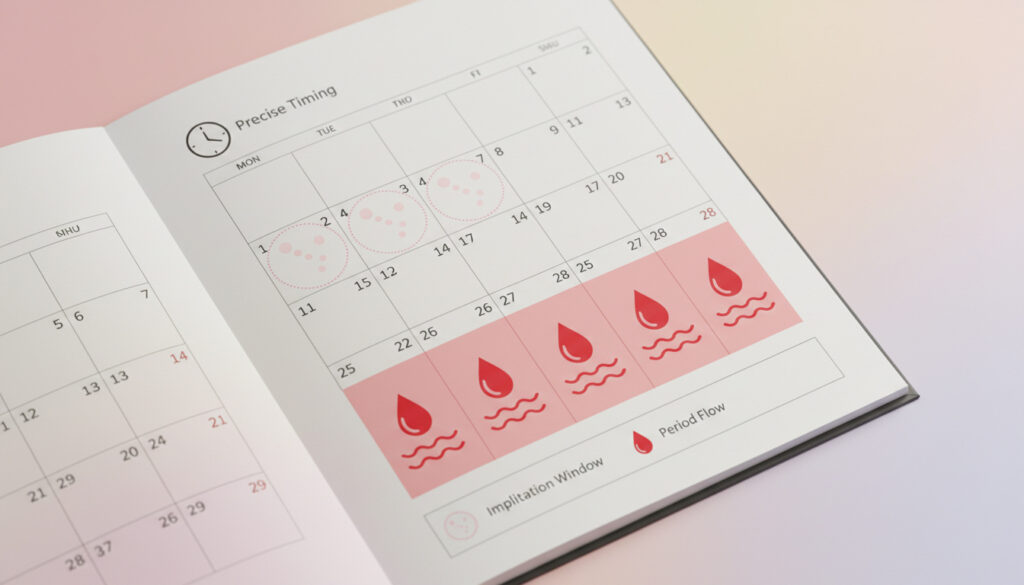
When Does Implantation Bleeding Occur – Timing, Signs and Period Differences
Implantation bleeding represents one of the earliest physical signs of pregnancy, occurring when a fertilized egg embeds itself into the uterine lining. This phenomenon typically manifests as light spotting approximately six to twelve days after ovulation, affecting an estimated 15 to 33 percent of pregnant individuals.
The timing often creates confusion, as the spotting appears just days before an expected menstrual period. Understanding the specific characteristics, biological mechanisms, and temporal patterns helps distinguish this normal occurrence from other types of bleeding.
Medical sources emphasize that while implantation bleeding can signal early pregnancy, its absence does not exclude conception. The following sections examine the precise timing, visual characteristics, and clinical significance based on established obstetric research.
When Does Implantation Bleeding Occur?
6-12 days post-ovulation
1-3 days typically
Pink/brown spotting
15-33% of pregnancies
- Implantation occurs when the embryo attaches to the endometrium, triggering minor capillary disruption.
- The window varies by individual cycle length and ovulation date.
- Spotting precedes the expected menstrual period rather than following a missed cycle.
- Approximately one in four to one in three pregnant individuals experience this symptom.
- Fertilization typically occurs within 24 hours of ovulation, with implantation following six to seven days later.
- In a standard 28-day cycle, bleeding aligns with days 20 through 24.
- Absence of bleeding does not indicate failed conception.
| Parameter | Measurement |
|---|---|
| Typical window | 6-12 DPO |
| Duration | Hours to 2 days |
| Flow amount | Spotting, less than one pad |
| Associated cramps | Mild, optional |
| Test timing | 10-14 DPO |
| Cycle day (28-day cycle) | Day 20-24 |
| Prevalence | 15-33% of pregnancies |
Sources: Perelel Health, Cleveland Clinic, American Pregnancy Association
What Does Implantation Bleeding Look Like?
Visual characteristics provide crucial differentiation clues. The discharge typically presents as light pink or brown spotting, distinct from the bright or dark red flow associated with menstruation. According to Healthline, the color results from older blood oxidizing during the slow passage through the cervical canal.
Color and Texture
The pinkish or brownish hue indicates minimal, slow bleeding from capillary disruption during embryo embedding. Some individuals notice thicker, gummier cervical mucus—clear or white—that accompanies the spotting. This differs markedly from menstrual blood, which typically appears brighter and flows more freely.
Flow Volume
Volume remains minimal by definition. Medical sources characterize true implantation bleeding as spotting requiring less than one sanitary pad, often appearing only when wiping. Australian Birth Stories notes that heavy flow, clots, or prolonged bleeding suggest alternative causes requiring clinical evaluation.
Pink or brown discharge lasting one to three days approximately one week after ovulation suggests implantation rather than menstruation. Bright red blood or heavy soaking indicates a different process.
Associated Symptoms
Mild cramping may accompany the spotting, though many experience no discomfort. The sensation, when present, remains significantly lighter than typical menstrual cramps. Flo Health emphasizes that these symptoms vary widely among individuals.
How to Tell Implantation Bleeding from Your Period
Distinguishing implantation bleeding from menstrual flow relies on temporal, visual, and quantitative differences. The timing provides the primary indicator: implantation spotting occurs six to twelve days past ovulation, while menstruation begins approximately fourteen days post-ovulation in regular cycles.
Timing Differences
Menstruation represents the shedding of the uterine lining when implantation does not occur. Conversely, implantation bleeding precedes the expected period by several days. Perelel Health clarifies that implantation occurs before the missed period, not after.
Visual and Physical Contrasts
Color and consistency provide secondary indicators. Implantation produces light pink or brown spotting, whereas menstrual flow typically begins with brighter red blood that may darken over days. The volume differential remains stark: implantation requires minimal protection, while menstruation necessitates regular pad or tampon changes.
Bleeding That Requires Evaluation
Significant pain, heavy flow, or duration exceeding three days suggests causes other than implantation. Cleveland Clinic advises consulting healthcare providers when bleeding deviates from the light, brief pattern characteristic of implantation.
How Long Does Implantation Bleeding Last?
Duration defines another key differentiator. While individual experiences vary, established parameters suggest a brief window.
Typical Duration Range
Most cases resolve within one to three days, with many lasting only hours. American Pregnancy Association cites this brevity as a distinguishing feature from menstruation, which typically persists for several days.
Bleeding extending beyond three days or requiring frequent pad changes warrants medical consultation to rule out ectopic pregnancy, miscarriage, or other complications. For more details on the causes of low red blood cell count, please see Ursachen für zu wenig rote Blutkörperchen.
Variations in Individual Experience
Not everyone experiences implantation bleeding. Statistics indicate 15 to 33 percent of pregnant individuals notice any spotting. First Response notes that absence of bleeding does not indicate absence of pregnancy.
Between one-quarter and one-third of pregnant women report implantation bleeding. The majority conceive without ever noticing this symptom.
Timeline of Implantation and Early Detection
- Ovulation (Day 0): The egg releases from the ovarian follicle. Source: Australian Birth Stories
- Fertilization (0-1 DPO): Sperm meets egg in the fallopian tube within 24 hours.
- Cellular Division (3-4 DPO): The zygote travels toward the uterus while dividing.
- Implantation Window (6-12 DPO): The blastocyst attaches to the uterine lining; light bleeding may occur. Source: Flo Health
- hCG Production (7-13 DPO): The embryo begins producing human chorionic gonadotropin following successful implantation.
- Expected Period (14 DPO): In non-pregnant cycles, menstruation begins; in pregnant cycles, implantation has already occurred.
- Optimal Testing (10-14 DPO): Home pregnancy tests detect hCG levels, typically most accurate after the missed period. Source: Cleveland Clinic
Established Facts and Persistent Uncertainties
Well-Established
- Implantation occurs 6-12 days after ovulation
- Bleeding affects 15-33% of pregnancies
- Color is typically pink or brown
- Duration ranges from hours to 3 days
- Flow remains lighter than menstruation
Variable or Unclear
- Exact timing varies by cycle length and ovulation date
- Individual symptom presentation differs widely
- No definitive diagnostic value without pregnancy confirmation
- Interaction with assisted reproductive technologies like IUI
- Precise hormonal triggers for bleeding remain under study
Biological Mechanisms and Clinical Context
Implantation bleeding results from the embryo’s invasion of the endometrial lining. Approximately ten to fourteen days after conception, the blastocyst burrows into the uterine wall, disrupting small blood vessels. This biological process differs fundamentally from menstrual shedding, which involves the breakdown of the entire endometrial layer.
The Non Binary Meaning – Definition, Pronouns and Identity Guide offers perspective on how medical terminology evolves, though physiological processes remain consistent across gender identities. Clinical guidance focuses on the biological events rather than identity categories.
Any bleeding during confirmed pregnancy requires professional evaluation, particularly when accompanied by pain or heavy flow. While implantation bleeding represents a normal variation, other first-trimester bleeding may indicate complications requiring immediate attention.
Medical Authority Perspectives
Implantation bleeding is light spotting 10-14 days after conception.
Early bleeding warrants medical evaluation.
These institutional perspectives underscore the importance of context. While light, brief spotting may represent normal implantation, clinical assessment remains essential for definitive diagnosis.
Summary
Implantation bleeding typically occurs six to twelve days after ovulation, appearing as light pink or brown spotting lasting one to three days in 15 to 33 percent of pregnancies. Distinguishing characteristics include timing before the expected period, minimal flow, and absence of significant pain. While the ICC Champions Trophy 2025 – Schedule, Teams, Venues and India Updates might dominate current sporting discussions, understanding reproductive health timelines remains crucial for individuals tracking fertility. Confirmation requires pregnancy testing rather than symptom observation alone.
Frequently Asked Questions
Is implantation bleeding a sign of pregnancy?
Light spotting can indicate early pregnancy, but only 15-33% of pregnant individuals experience it. Absence of bleeding does not exclude pregnancy, and confirmation requires a pregnancy test detecting hCG hormone.
What causes implantation bleeding?
The embryo burrowing into the uterine lining 10-14 days after conception disrupts small blood vessels, causing minor spotting. This differs from menstrual shedding of the uterine lining.
Does everyone get implantation bleeding?
No. Between one-quarter and one-third of pregnant women report this symptom. The majority experience pregnancy without any noticeable implantation spotting.
When to take pregnancy test after implantation bleeding?
Wait 1-2 days after implantation for hCG levels to rise, though testing after a missed period provides optimal accuracy. Most individuals test around 10-14 days post-ovulation.
Can implantation bleeding be heavy?
No. True implantation bleeding remains light spotting requiring less than one pad. Heavy flow, clots, or prolonged bleeding suggest other conditions requiring medical evaluation.
Is implantation bleeding painful?
Mild cramping may occur but significant pain is atypical. Heavy cramping or severe pain warrants immediate medical consultation to rule out complications.
More related posts
 Best Samsung S25 Ultra Case: Official & Rugged in 2025
 Costa Georgiadis: Bio, Age, Relationship, Children, Net Worth
 Brian Shaw: Height, Weight, and Comparison to Shaq & Eddie Hall
 Jack Champion: Age, Height, and the Kissing Controversy
 Paul Wesley Net Worth, Career, and Biography in 2025
 Ravindra Jadeja: Biography, Career Stats, CSK Future, and More
 Sabrina Carpenter Movies and TV Shows: Full Filmography
 Correa alba: White Correa Care Guide for Coastal Gardens
