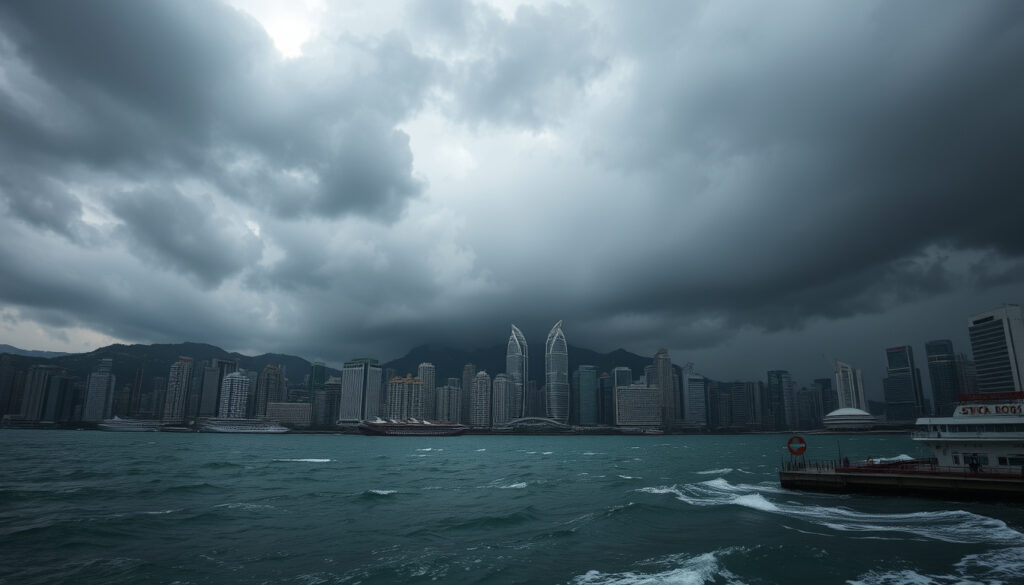
Typhoon Hong Kong: Warnings, History & Travel Safety Guide
Anyone who has stared out a hotel window in Hong Kong during a summer downpour knows the uneasy thrill of a typhoon approaching, and the city, a global hub of skyscrapers and ferries, is no stranger to these powerful storms — it’s been struck by dozens over the past century, and the 2024 season alone brought multiple super typhoons. This guide combines real-time alert systems, historical records, and practical safety advice to help you navigate Hong Kong’s typhoon season with confidence.
Average annual typhoons affecting Hong Kong: 10 ·
Severe impact per year: 1-2 ·
Deadliest typhoon on record: 1937 (over 11,000 deaths) ·
Most recent super typhoon: Saola (2023) ·
Typical typhoon season: May to November
Quick snapshot
- Hong Kong experiences typhoons every year (Hong Kong Observatory (HK’s official weather bureau))
- Warning signals range from Standby No. 1 to Hurricane No. 10 (Hong Kong Observatory)
- Peak typhoon season runs July through September (Hong Kong Observatory)
- Exact arrival date of the next typhoon (Hong Kong Observatory)
- Magnitude of future storms remains uncertain (Hong Kong Observatory)
- Long-term trend predictions are still imprecise (Hong Kong Observatory)
- The exact timing of the next T8 signal is unpredictable (Hong Kong Observatory)
- 1937: Great Hong Kong Typhoon kills 11,000+ (Wikipedia (encyclopedic reference))
- 2018: Super Typhoon Mangkhut triggers T10 signal (Wikipedia)
- 2023: Super Typhoon Saola prompts T8 warning (Wikipedia)
- Monitor HKO for real-time updates (Hong Kong Observatory)
- Sign up for government alert apps (Hong Kong Observatory)
- Book travel outside peak season (Oct–Dec recommended) (Hong Kong Observatory)
Six numbers that define Hong Kong’s typhoon reality — from average frequency to the deadliest storm on record.
| Fact | Value |
|---|---|
| Average typhoons per year | 10 |
| Peak season | July through September |
| Deadliest typhoon | 1937 (11,000+ fatalities) |
| Last super typhoon | Saola in September 2023 |
| Tropical cyclone warning signals | T1, T3, T8, T9, T10 |
| 2024 super typhoons (Yagi, Krathon, Yinxing) | Multiple, per HKO overviews |
Is there a typhoon in Hong Kong right now?
How to check the Hong Kong Observatory warning
The most reliable way to know the current typhoon status is the Hong Kong Observatory (HKO) official website, which updates tropical cyclone warnings in real time. As of this writing, no Tropical Cyclone Warning Signal is in force, but the situation can change quickly.
- Visit hko.gov.hk (government meteorological authority)
- Enable push alerts on the MyObservatory mobile app
- Check local news for signal hoisting announcements
Travellers should check the HKO site every morning during typhoon season. When a T8 signal is hoisted, all non-essential services shut down — including most public transport.
What the Tropical Cyclone Warning Signal means
The HKO issues five signals, each tied to a specific threat level (Hong Kong Observatory):
- Standby No. 1 – a tropical cyclone is within 800 km of Hong Kong.
- Strong Wind No. 3 – winds 41–62 km/h expected.
- Gale or Storm Signal No. 8 – winds 63–117 km/h; schools and offices close.
- Increasing Gale or Storm Signal No. 9 – winds are increasing.
- Hurricane Signal No. 10 – sustained winds ≥118 km/h, severe damage likely.
The pattern: the HKO has given about two hours’ notice before hoisting the No. 8 signal since 1987. That window is critical for travellers to reach shelter.
The implication: a T8 signal isn’t just a weather event — it’s a legal trigger for business closures. Tourists caught outside during a T8 can face transport chaos and safety risks.
Has a typhoon ever hit Hong Kong?
The Great Hong Kong Typhoon of 1937
Yes, dozens of typhoons have struck Hong Kong, and the deadliest remains the 1937 storm that killed more than 11,000 people (Wikipedia (1937 Hong Kong typhoon)).
That catastrophe reshaped the city’s approach to storm preparedness. Today, the HKO’s early warning system is among the most advanced in Asia, but the 1937 event is a grim reminder of what can happen when a cyclone hits a densely populated harbour.
Other notable typhoons in history
- Typhoon Mary – July 1960, caused severe flooding
- Super Typhoon Mangkhut – September 2018, brought T10 signal and knocked down hundreds of trees (Wikipedia)
- Super Typhoon Saola – September 2023, triggered T8 warning, widespread closures (Wikipedia)
- 2024 season – super typhoons Yagi, Krathon, Yinxing affected the region (Hong Kong Observatory (monthly overviews))
The catch: Hong Kong’s dense infrastructure makes it surprisingly resilient — but also uniquely vulnerable. A direct hit from a super typhoon can paralyse the city for days.
When was the last super typhoon in Hong Kong?
Super Typhoon Saola (2023)
The most recent super typhoon to make a direct impact was Super Typhoon Saola in September 2023. It was the strongest to affect Hong Kong since Mangkhut in 2018, forcing the HKO to hoist the T8 signal and leading to widespread school and office closures.
Saola passed about 40 km south of the island, bringing torrential rain and gusting winds that uprooted trees and flooded low-lying areas.
Impact and recovery
According to the Hong Kong Observatory, recovery after a super typhoon typically takes days: transport resumes once the T3 signal replaces T8, but ferry services may remain suspended longer. In 2024, the 2,000 evacuations reported during August storms showed how quickly a super typhoon can disrupt daily life (Hong Kong Observatory).
Super typhoons in Hong Kong are no longer rare: 2024 saw Yagi intensify into a super typhoon in September and Krathon in October. Travellers should expect at least one super typhoon every season.
The pattern: super typhoons are no longer rare in Hong Kong.
What month is usually typhoon in Hong Kong?
Peak months: July to September
Hong Kong’s typhoon season runs from May to November, with peak activity from July through September (Hong Kong Observatory). The HKO data shows that 80% of tropical cyclones that require warning signals occur in these three months.
Travel considerations by month
For travellers, the sweet spot is October to December — after the peak but before the dry winter. The risk of encountering a typhoon is lower, and the weather is pleasant. January to April is also safe but cooler. The trade-off: cheaper flights and emptier streets come with a small chance of a late-season storm. In November 2024, for example, super typhoons Yinxing, Toraji, and Man-yi all required warning signals.
What this means: if you’re fixed on summer travel, build in a buffer day or two. A T8 signal can ground flights and strand you at the airport.
Is Hong Kong safe to travel right now?
Travel advisories from government sources
The Government of Canada travel advisory recommends travellers monitor local weather and heed official warnings. The US State Department and UK Foreign Office similarly advise checking the HKO site.
Safety during a typhoon comes down to preparation: know your hotel’s emergency plan, stock water and snacks, and download the MyObservatory app.
Pros and cons of traveling in typhoon season
Upsides
- Lower hotel and flight prices (except August)
- Fewer crowds at attractions
- Dramatic storm-watching from safe locations
Downsides
- Flight cancellations and delays (e.g., 80+ flights cancelled in Aug 2024, per HKO)
- Risk of being stuck indoors for 1–2 days
- Power and water disruption affecting hotels
- Limited emergency medical services during T8
The trade-off: for budget travellers, typhoon season offers real savings. But the cost of a two-day disruption can outweigh the discount — especially if you miss a connecting flight.
Timeline: Hong Kong’s most significant typhoons
- September 2, 1937 – Great Hong Kong Typhoon kills over 11,000 people (Wikipedia)
- July 1960 – Typhoon Mary causes severe flooding
- September 2018 – Super Typhoon Mangkhut brings T10 signal (Wikipedia)
- September 1–2, 2023 – Super Typhoon Saola triggers T8 warning (Wikipedia)
- August–November 2024 – Multiple super typhoons (Yagi, Krathon, Yinxing) require warning signals (Hong Kong Observatory)
The pattern: the most destructive typhoons have occurred in the last decade.
What we know and what we don’t
Confirmed facts
- Hong Kong experiences typhoons annually (Hong Kong Observatory)
- Warning signals are issued by HKO based on wind speed (Hong Kong Observatory)
- 1937 typhoon death toll exceeded 11,000 (Wikipedia)
- 2024 saw multiple super typhoons in the region (Hong Kong Observatory)
What’s unclear
- Exact date of the next typhoon
- Whether future storms will be stronger due to climate change
- Long-term accuracy of seasonal forecasts
The implication: travelers should plan for uncertainty.
Quotes from authorities
“The Hong Kong Observatory issues tropical cyclone warning signals based on the intensity and proximity of the storm.”
– Hong Kong Observatory (Hong Kong’s official weather authority)
“Canadians should exercise caution, monitor local media, and follow the instructions of local authorities.”
– Travel.gc.ca (Government of Canada travel advisory)
“Hong Kong experiences about 10 typhoons per year on average, of which 1–2 become severe.”
“The 1937 typhoon remains the deadliest natural disaster in Hong Kong’s history.”
For travellers, the choice is clear: check the HKO site daily, book travel insurance that covers storms, and consider visiting between October and December for the lowest typhoon risk. Or, if you chase storms, go in August — but pack a plan B.
hko.gov.hk, en.wikipedia.org, typhooncommittee.org, hko.gov.hk, data.gov.hk, hko.gov.hk
Travelers should monitor current Hong Kong weather conditions alongside official typhoon warnings from the Hong Kong Observatory to plan their trips safely.
Frequently asked questions
How long do typhoons in Hong Kong typically last?
A typhoon usually passes within 12–36 hours, though residual rain and transport disruption may last another day.
What is the strongest typhoon to hit Hong Kong?
The 1937 Great Hong Kong Typhoon is the deadliest. In terms of wind, Super Typhoon Mangkhut (2018) recorded the highest sustained winds on land.
Are flights cancelled during typhoons?
Yes. When T8 or higher is hoisted, airport operations largely halt. In August 2024, at least 80 flights were cancelled, per HKO.
What are the different warning signals?
Standby No. 1, Strong Wind No. 3, Gale/Storm No. 8, Increasing Gale No. 9, Hurricane No. 10.
How to get real-time updates?
Use the Hong Kong Observatory website or MyObservatory app.
Does Hong Kong have typhoon shelters?
Yes, the government operates dozens of shelters that open when T8 is hoisted. Hotels also provide safe areas.
More related posts
 iPhone 17 Pro Max Release Date: Ireland Launch & Price
 Jules Ari: Biography, Age, Net Worth, and Podcast Facts
 Jeffrey Dahmer: Biography, Crimes, and Trial
 Aaron Pierre: Biography, Ethnicity, Relationship, and Movies
 What is Kinetic Energy? Definition, Formula, Examples & Types
 Peter Dutton News – Latest Updates After Election Defeat
 Max McNown: Biography, Career, Relationship & Tour 2026
 Bob Seger: What Happened, Health, and His Greatest Songs
