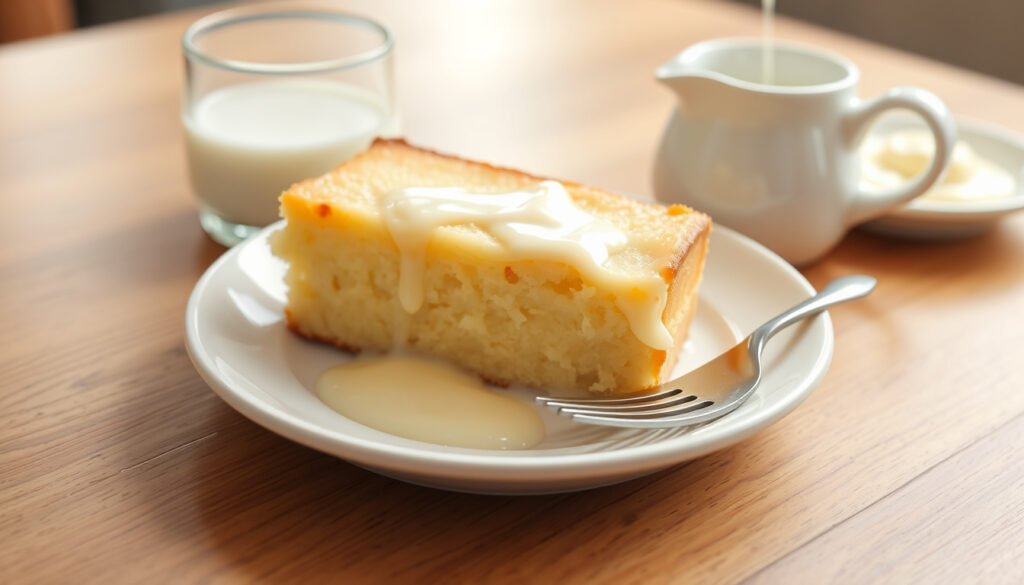
Tres Leches Cake: Ingredients, Soak Times & Why It’s Not Soggy
There’s a moment when you cut into a tres leches cake and the fork slides through a cloud of milk-soaked sponge without leaving a puddle. That’s not luck—it’s structure. This guide walks through the ingredients, the soaking science, and the timing that separates a perfect three-milk cake from a soggy one.
Origin: Mexico / Latin America (20th century) (Encyclopaedia Britannica) ·
Name meaning: Three-milk bread (Spanish) ·
Key milks: Evaporated, condensed, whole milk ·
Common topping: Whipped cream and cinnamon ·
Typical soak time: 2 to 8 hours (refrigerated)
Quick snapshot
- A Latin American sponge cake soaked in three milks (Encyclopaedia Britannica)
- Topped with whipped cream and cinnamon (Erren’s Kitchen)
- Sponge cake (eggs, flour, sugar, vanilla) (Encyclopaedia Britannica)
- Evaporated, condensed, and whole milk (Encyclopaedia Britannica)
- Whipped cream and cinnamon for topping (Erren’s Kitchen)
- Moist, not soggy (Belly Full)
- Light and airy from the sponge base (Encyclopaedia Britannica)
- Holds shape when served cold (Belly Full)
- Refrigerate 2–8 hours (Erren’s Kitchen)
- Overnight recommended (Erren’s Kitchen)
- Pour milk slowly over cake (Erren’s Kitchen)
Six key facts at a glance — one pattern: the cake’s quality depends on the right sponge and soak, not on exotic ingredients.
| Label | Value | Source |
|---|---|---|
| Name | Tres leches cake (three-milk cake) | Encyclopaedia Britannica |
| Origin | Mexico / Latin America, 20th century | Encyclopaedia Britannica |
| Main ingredients | Sponge cake, evaporated milk, condensed milk, whole milk, whipped cream | Encyclopaedia Britannica |
| Milk ratio (common) | 1 cup evaporated, 1 cup condensed, 1 cup whole milk | Belly Full |
| Topping | Whipped cream, cinnamon, sometimes fruit | Erren’s Kitchen |
| Serve temperature | Cold (refrigerated for 2–8 hours) | Erren’s Kitchen |
What is tres leches cake made of?
Key ingredients: sponge cake, evaporated milk, condensed milk, whole milk
- The base is a sponge cake — eggs, flour, sugar, and vanilla — that’s intentionally light and airy (Encyclopaedia Britannica).
- The three milks are evaporated milk, sweetened condensed milk, and whole milk (or sometimes heavy cream).
- Topping is typically whipped cream and a dusting of cinnamon (Erren’s Kitchen).
Common variations: coconut milk, rum, different toppings
- Some recipes replace whole milk with coconut milk or add a splash of rum (Belly Full).
- Fruit toppings—strawberries, mango—are common in some regions.
The implication: the classic ingredient set is small but deliberate — each milk brings a different role: condensed milk for sweetness and body, evaporated for creaminess, whole milk for hydrating without overpowering.
Home bakers who substitute low-fat milk lose the richness that makes tres leches feel indulgent. Stick with whole milk or cream for the best texture.
The pattern here: the cake’s success hinges on choosing the right milks, not just any dairy.
Why is tres leches cake so good?
The science of moisture vs. sogginess
- A light sponge with stiffly beaten egg whites creates a structure that absorbs milk without collapsing (Encyclopaedia Britannica).
- The combination of three milks gives balanced sweetness — condensed milk adds sugar, while evaporated and whole milk dilute it to a pleasant level.
Flavor profile: sweet, creamy, light
- It’s served cold, which firms the cake and makes each bite feel clean (Belly Full).
- The whipped cream topping adds a cool, airy counterpoint.
What this means: tres leches succeeds because the sponge is designed to hold liquid, not fight it. The milk mixture is a partner, not an invader.
Is tres leches cake supposed to be soggy?
The difference between moist and soggy
- A properly made tres leches is moist — you should see a tiny puddle when you pierce it, but the cake keeps its shape (Belly Full).
- Sogginess indicates over‑soaking or a dense cake that never opened its pores.
Perfect milk-to-cake ratio
- The cake should hold its shape when cut and served (Belly Full).
- Anti‑soggy techniques: pour milk slowly, let the cake cool completely first, and refrigerate for at least 2 hours (Erren’s Kitchen).
The trade-off: a cake that’s too dry is disappointing, but one that’s too wet is unappetizing. The window of perfection is between 2 and 8 hours of soak time.
If your tres leches turns into soup, it’s almost always because you skipped cooling the cake or poured all the milk at once. Gradual pouring is non‑negotiable.
The takeaway: a soggy cake is a fixable mistake, but prevention is better than rescue.
How long should milk sit in tres leches cake?
Ideal soaking time: 2 to 8 hours
- A minimum of 2 hours is needed for the milk to penetrate, but 4–8 hours gives deeper absorption (Erren’s Kitchen).
- The cake must be refrigerated during soaking to prevent spoilage.
How to check when it’s done
- The cake should feel uniformly damp — press gently and you’ll see a tiny bead of milk on the surface, but no pooling.
- Overnight soaking is widely recommended for best flavor and texture (Erren’s Kitchen).
The pattern: longer is better up to about 8 hours. Beyond that, the cake can start to break down. Set a timer if you’re soaking during the day; don’t rely on memory.
Where does tres leches cake originate?
History in Mexico and Latin America
- The earliest known references to tres leches cake appear in Mexico during the 1930s–1940s (Encyclopaedia Britannica).
- The recipe spread across Central and South America by the mid‑20th century.
Popularization in the United States
- Tres leches became widely available in U.S. restaurants and bakeries in the 1990s.
- Today, vegan and gluten‑free versions appear on menus nationwide.
The implication: the exact country of origin is debated (Mexico vs. multiple Latin American countries), but the dessert’s history is a shared one — no single inventor, just a collective tradition.
How to make tres leches cake (step‑by‑step)
- Bake the sponge: Separate eggs, beat whites to stiff peaks, fold into batter. Bake at 350°F (175°C) for 25–30 minutes in a 9×13‑inch dish (Erren’s Kitchen). Let cool completely.
- Poke holes: Use a fork or skewer to pierce the cake all over (Sugar Spun Run).
- Mix the milks: Combine 1 cup evaporated milk, 1 can (14 oz) sweetened condensed milk, and 1 cup whole milk (Belly Full).
- Pour slowly: Ladle the milk mixture over the cake gradually, allowing each addition to soak in before adding more (Erren’s Kitchen).
- Chill: Cover and refrigerate for at least 2 hours, ideally overnight (Belly Full).
- Top and serve: Spread whipped cream (heavy cream with powdered sugar) over the cake just before serving. Dust with cinnamon.
The catch: skipping the cooling step or rushing the pour are the two most common mistakes. The cake needs time and patience to become truly tender.
Clarity check: what’s confirmed and what’s not
Confirmed facts
- Tres leches cake contains three milks: evaporated, condensed, and whole milk (Encyclopaedia Britannica).
- It originated in Mexico or Central America in the 20th century (Encyclopaedia Britannica).
- The cake is soaked and served cold (Belly Full).
- Topping is typically whipped cream and cinnamon (Erren’s Kitchen).
What’s unclear
- Exact country of origin (Mexico vs. multiple countries claims) (Encyclopaedia Britannica)
- Who invented the first recipe (no credited individual)
- Whether the milk ratio of 1:1:1 is universal (recipes vary widely) (Belly Full)
- Whether fruit toppings are authentic or a regional adaptation (common in some areas) (Erren’s Kitchen)
Perspectives from the kitchen
Tres leches cake is a sponge cake soaked in a mixture of three milks — evaporated milk, sweetened condensed milk, and whole milk — then topped with whipped cream.
— Encyclopaedia Britannica
Poke holes all over the cooled cake with a fork or skewer before adding the milk mixture to help it absorb evenly.
— Sugar Spun Run
The editorial verdict: tres leches is exactly what its name promises — a cake that drinks three milks and stays intact. For home bakers, the choice is clear: invest in a light sponge and give it patience, or accept a puddle on the plate.
Frequently asked questions
Can I use low-fat milk for tres leches?
Does tres leches cake need to be refrigerated?
Can I make tres leches cake ahead of time?
What is the best cake pan for tres leches?
Can I freeze tres leches cake?
What if my cake is too soggy after soaking?
Can I use coconut milk or other milks?
More related posts
 Moses Itauma: Record, Ethnicity, Bio & Next Fight
 Kate Beckinsale: Illness, Weight Loss & Appearance Rumors
 Mo Salah Transfer News: Contract, Future, World Cup
 Karan Aujla: Marriage, Net Worth, Citizenship, Attack
 Sabrina Carpenter Movies and TV Shows: Full Filmography
 CRP Blood Test: Normal Range, High Levels, and What to Do
 Jimmy Butler ACL Injury: Recovery Timeline and Trade Rumors
 Damon Salvatore Guide: Age, Death, Relationships & Quotes
