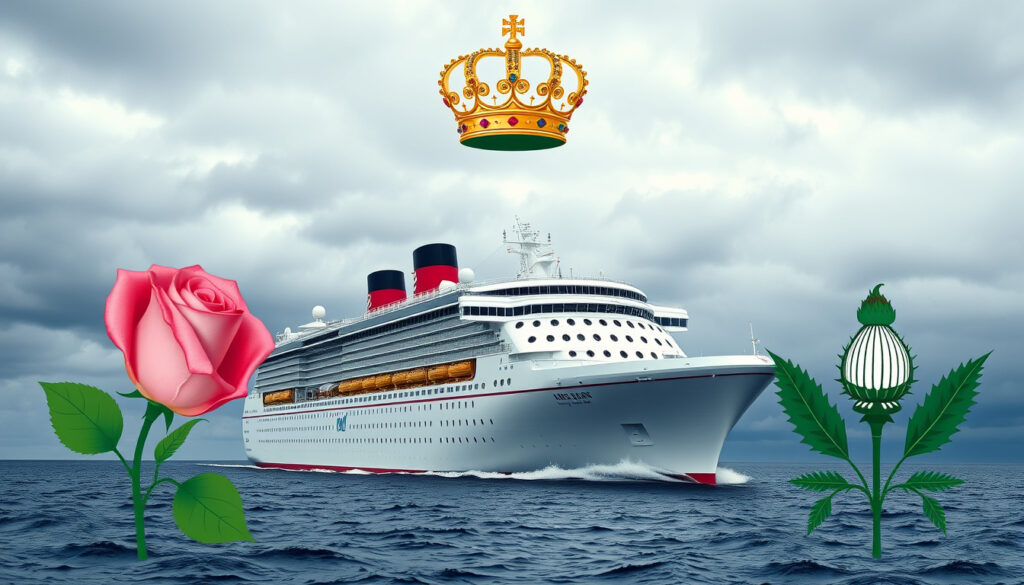
Queen Mary: History of Mary I, Mary Queen of Scots & Ship
Few names in history carry as much weight — and confusion — as Queen Mary. Whether you’re thinking of the Tudor queen who burned Protestants, the Scottish queen who lost her head, or the ocean liner that still floats in California, each shares a name but little else. This article separates fact from legend across all three, so you can finally keep them straight.
Number of Queen Mary historical figures: 3 ·
Year Mary I died: 1558 ·
Year Mary, Queen of Scots executed: 1587 ·
Year RMS Queen Mary launched: 1936 ·
Deaths attributed to Mary I (burnings): ~280
Quick snapshot
- Mary I executed ~280 Protestants as heretics (Smithsonian Magazine (history publication))
- Mary, Queen of Scots was executed for treason on 8 February 1587 (National Trust for Scotland (heritage charity))
- RMS Queen Mary collided with HMS Curacoa on 2 October 1942, killing 337 crew (The Queen Mary (official ship site))
- Exact number of hauntings on the Queen Mary ship
- Whether Elizabeth I genuinely regretted Mary Stuart’s execution
- 1516: Birth of Mary I
- 1587: Execution of Mary, Queen of Scots
- 1936: RMS Queen Mary maiden voyage
- The RMS Queen Mary remains a hotel and museum in Long Beach, California (The Queen Mary (official ship site))
- Mary I and Mary, Queen of Scots continue to be studied as pivotal figures in British history (The Queen Mary (official ship site))
Five key facts, one pattern: the lives and legacies of these three entities named Queen Mary span nearly 500 years — from religious persecution and royal intrigue to maritime tragedy and modern tourism.
| Attribute | Mary I (Tudor) | Mary, Queen of Scots (Stuart) | RMS Queen Mary (Ship) |
|---|---|---|---|
| Full name | Mary I (Queen Mary Tudor) | Mary, Queen of Scots (Mary Stuart) | RMS Queen Mary |
| Birth / Death | 1516–1558 | 1542–1587 | Launched 1936; still afloat |
| Reign | 1553–1558 | 1542–1567 | Maiden voyage: 1936 |
| Key legacy | Religious persecution, “Bloody Mary” | Execution by Elizabeth I | Transatlantic liner, now floating hotel |
| Connections | All share the name “Queen Mary” but represent very different chapters of history | ||
What is the real story of Queen Mary?
Who were the three Queen Marys?
- Mary I of England (1516–1558) — First queen regnant of England, daughter of Henry VIII and Catherine of Aragon (Historic Royal Palaces (royal palace charity)).
- Mary, Queen of Scots (1542–1587) — Sovereign of Scotland from infancy, later imprisoned and executed by her cousin Elizabeth I (Royal Museums Greenwich (national museum)).
- RMS Queen Mary — Luxury ocean liner launched in 1936, named after Mary of Teck, wife of King George V (Historic Hotels of America (hotel heritage organization)).
Why are they all called Queen Mary?
Coincidence and convention. The first two were actual queens named Mary. The ship was named in honor of the then-reigning Queen Consort, Mary of Teck. The name has since become a source of confusion — but each “Queen Mary” is distinct in time, place, and story.
The implication: When someone says “Queen Mary,” always clarify which one they mean — the Tudor queen, the Stuart queen, or the ship — because the facts could not be more different.
Why was Mary called Bloody Mary?
What persecution did Mary I carry out?
- Mary I restored Roman Catholicism after the Protestant reforms of her father Henry VIII and brother Edward VI (Historic Royal Palaces (royal palace charity)).
- She enacted laws against heresy, leading to the execution of around 280 Protestants at the stake, as reported by Smithsonian Magazine (history publication).
How many Protestants were executed under Mary I?
Historical estimates vary slightly: Smithsonian Magazine puts the figure at roughly 280, while Discover Britain (UK history magazine) suggests around 300. The number is not precise to the last person, but the scale — hundreds executed in five years — is what earned her the epithet “Bloody Mary,” popularized by Protestant martyrologist John Foxe.
Why this matters: Modern historians argue that the label “Bloody Mary” was partly propaganda from Foxe’s Book of Martyrs, and that her half-sister Elizabeth I executed far more Catholics. Yet the name stuck, coloring public perception for centuries.
Mary I’s religious burnings were a brutal tool of state — fewer than 300 victims over five years. But the emotional impact on Protestant England turned her name into a lasting synonym for cruelty.
Why did Elizabeth execute Mary?
What was the Babington Plot?
- In 1586, Mary, Queen of Scots was implicated in a plot to assassinate Elizabeth I and place Mary on the English throne (National Museums Scotland (national museum of Scotland)).
- Letters from Mary to the conspirators were intercepted and decoded by Sir Francis Walsingham’s spy network.
How did Mary, Queen of Scots threaten Elizabeth?
Mary was a Catholic claimant to the English throne in an era when religion shaped politics. Many English Catholics saw her as the legitimate queen. After 19 years of captivity in England (Historic UK (British history resource)), her involvement in the Babington Plot gave Elizabeth the proof she needed. Mary was tried for treason and executed on 8 February 1587 at Fotheringhay Castle (National Trust for Scotland (heritage charity)).
The trade-off: Elizabeth faced a dilemma — spare her cousin and risk a Catholic uprising, or execute an anointed queen and invite international outrage. She chose the latter, and Mary died.
Who was Queen Mary to Queen Elizabeth?
Was Mary I Elizabeth’s half-sister?
Yes. Mary I and Elizabeth I were half-sisters, both daughters of Henry VIII — Mary by Catherine of Aragon, Elizabeth by Anne Boleyn (Historic Royal Palaces (royal palace charity)). Their relationship was strained by religious differences and the power struggle over the succession.
Was Mary, Queen of Scots Elizabeth’s cousin?
Mary, Queen of Scots was Elizabeth’s first cousin once removed through Margaret Tudor, Henry VIII’s sister (Royal Museums Greenwich (national museum)). That family tie did not prevent them from becoming rivals. Mary’s claim to the English throne, her Catholic faith, and her son James (later James I) all made her a threat Elizabeth could not ignore.
The pattern: Royal blood did not create solidarity — it created risk. Both Mary I and Mary, Queen of Scots were dangerous to Elizabeth because of who they could rally against her.
What tragedy happened on Queen Mary?
What is the Queen Mary ship collision with HMS Curacoa?
- On 2 October 1942, during World War II, the RMS Queen Mary was transporting troops across the Atlantic when it rammed and sank its escort, HMS Curacoa (The Queen Mary (official ship site)).
- 337 crew members of the Curacoa died. The incident was kept secret during the war.
How many deaths are associated with the Queen Mary ship?
Beyond the Curacoa tragedy, there have been at least 49 recorded deaths on the Queen Mary during its service life, including accidents and illnesses. The ship is also famously reputed to be haunted, with staff and visitors reporting ghost sightings in the engine room and pool area.
What this means: The Queen Mary’s wartime service and later reputation as a haunted hotel have made it a unique blend of maritime history and pop culture phenomenon.
The collision with HMS Curacoa remains the worst friendly-fire disaster involving a passenger liner in World War II — but it is the ghost stories, not the history, that draw most visitors today.
Comparison: Mary I vs Mary, Queen of Scots vs RMS Queen Mary
Three entities, one name — but their timelines, purposes, and legacies could not be more distinct.
| Aspect | Mary I (Tudor) | Mary, Queen of Scots (Stuart) | RMS Queen Mary (Ship) |
|---|---|---|---|
| Born | 1516 | 1542 | Keel laid 1930 |
| Died / Ended | 1558 (natural causes) | 1587 (execution) | Retired 1967 |
| Primary identity | Queen regnant of England | Queen regnant of Scotland | Ocean liner / troopship |
| Famous for | Religious persecution | Rivalry with Elizabeth I | Speed, luxury, collisions, hauntings |
| Current status | Buried in Westminster Abbey | Buried in Peterborough Cathedral | Hotel and museum in Long Beach, CA |
Timeline
- 1516 — Birth of Mary I of England (Discover Britain (UK history magazine))
- 1542 — Birth of Mary, Queen of Scots (Royal Museums Greenwich (national museum))
- 1553–1558 — Reign of Mary I (Discover Britain (UK history magazine))
- 1587 — Execution of Mary, Queen of Scots (National Trust for Scotland (heritage charity))
- 1936 — Launch of RMS Queen Mary (Historic Hotels of America (hotel heritage organization))
- 1942 — Collision with HMS Curacoa (The Queen Mary (official ship site))
- 1967 — RMS Queen Mary retired and docked in Long Beach (The Queen Mary (official ship site))
Clarity: What we know and what’s still debated
Confirmed facts
- Mary I executed approximately 280 Protestants for heresy (Smithsonian Magazine)
- Mary, Queen of Scots was executed for treason on 8 February 1587 (National Trust for Scotland)
- RMS Queen Mary collided with HMS Curacoa on 2 October 1942, killing 337 (The Queen Mary)
What’s unclear
- Exact number of hauntings on the Queen Mary ship — reports vary widely
- Whether Elizabeth I genuinely regretted Mary Stuart’s execution — no direct evidence survives
Perspectives from history
“These grave and heinous offenses against God and the realm have made her name an abomination.”
— John Foxe, summarizing Mary I’s legacy in Foxe’s Book of Martyrs (1563), a key work that popularized the “Bloody Mary” label.
“You are a true sister, but I cannot trust you.”
— Purported words of Elizabeth I to Mary, Queen of Scots, reflecting the tense bond between the two queens. The execution warrant was signed shortly after.
“The engine room is the most active spot — we get reports of a man in a white shirt walking through the bulkhead.”
— Queen Mary ship staff member, describing paranormal activity reported by guests and crew.
The legacy of the name Queen Mary
Three distinct subjects share one famous name, each leaving a very different mark. For the history buff, the distinction between Mary I and Mary, Queen of Scots is critical to understanding Tudor-Stuart politics. For the traveler, the RMS Queen Mary offers a living piece of maritime history. For the curious reader, the lesson is clear: always check which Queen Mary you’re dealing with — because the facts are as different as the centuries that separate them.
For readers interested in other royal figures, explore our articles on Queen Mother: Life, Relationships, and Controversies and Jane Seymour: Actress vs Queen – Biography, Family, Net Worth.
Frequently asked questions
Is the Queen Mary ship really haunted?
Many staff and visitors report ghost sightings, especially in the engine room and pool area. However, there is no scientific evidence to confirm paranormal activity. The ship’s haunted reputation is a major draw for tourists.
How many queens named Mary ruled England?
Only one queen regnant named Mary has ruled England in her own right: Mary I (1553–1558). Mary, Queen of Scots ruled Scotland, not England.
Are Mary I and Mary, Queen of Scots the same person?
No. Mary I was the Tudor queen of England (1516–1558). Mary, Queen of Scots was the Stuart queen of Scotland (1542–1587). They lived in different centuries and were rivals for the English throne.
What is the difference between Mary Tudor and Mary Stuart?
Mary Tudor (Mary I) was the daughter of Henry VIII and Catherine of Aragon, queen of England. Mary Stuart (Mary, Queen of Scots) was the daughter of James V of Scotland, queen of Scotland. Mary Tudor died naturally; Mary Stuart was executed by Elizabeth I.
Why is the ship named Queen Mary?
The RMS Queen Mary was named after Mary of Teck, the wife of King George V. The ship’s name honors the Queen Consort, not any historical ruling queen named Mary.
Did Mary I have any children?
No. Mary I had no children. She had two false pregnancies but no surviving heir. Her half-sister Elizabeth I succeeded her.
What happened to Mary I’s body?
Mary I died on 17 November 1558 and was buried in Westminster Abbey. Her body lies in the same vault as her sister Elizabeth I, despite their turbulent relationship.
More related posts
 Brisbane to Melbourne Flights: Direct, Cheap & Quick
 Marc Anthony: Biography, Wives, Net Worth, and Songs
 Cod Liver Oil – Benefits, Dosage and Safety Guide
 Damon Salvatore Guide: Age, Death, Relationships & Quotes
 Anna McNulty: Age, Real Name, and AGT Journey
 Tiffany Salmond: Age, Background, Career, and Current Work
 Gold Spot Price: Live Chart, USD per Oz & Gram Today
 Paige Turco: Ethnicity, Injury, Religion, Net Worth, and Career
