Peter Lalor: Biography of the Eureka Stockade Leader
Peter Lalor never set out to become a democratic icon, but the Irish immigrant who led the Eureka Stockade rebellion lost his left arm to a musket ball on 3 December 1854 (Eureka Centre Ballarat video), yet within a year he was seated in the Victorian parliament. He would later become Speaker of the Victorian Legislative Assembly (Britannica encyclopedia).
Born: 1827 in County Laois, Ireland ·
Died: 1889 in Melbourne, Australia ·
Famous for: Leading the Eureka Stockade rebellion (1854) ·
Injury: Lost left arm in the Eureka battle (3 December 1854) ·
Highest office: Speaker of the Victorian Legislative Assembly
Quick snapshot
- Born in Ireland 1827 (State Library Victoria archive)
- Left during the Famine 1852 (State Library Victoria archive)
- Arrived in Australia and joined the gold rush (State Library Victoria archive)
- Led the rebellion 3 Dec 1854 (National Museum of Australia)
- Lost left arm in battle (National Museum of Australia)
- Became a symbol of democratic rights (National Museum of Australia Digital Classroom)
- Elected to Victorian Assembly 1855 (Eureka Australia Descendants and Supporters)
- Served as Speaker 1875–1886 (Britannica encyclopedia)
- Advocate for miners’ rights then conservative (National Museum of Australia)
- Suburb named Lalor (Britannica encyclopedia)
- Famous Southern Cross oath (National Museum of Australia)
- Commemorated as democracy icon (National Museum of Australia Digital Classroom)
Eight key facts, one pattern: Lalor’s life flipped from rebel to ruler faster than any modern politician’s career path.
| Label | Value |
|---|---|
| Full name | Peter Lalor |
| Born | 5 February 1827, County Laois, Ireland |
| Died | 9 February 1889, Melbourne, Victoria, Australia |
| Nationality | Irish-Australian |
| Known for | Leader of the Eureka Stockade |
| Political party | Independent / Conservative |
| Spouse | Alicia Dunne |
| Children | Four |
Why was Peter Lalor significant to Australia?
What was his role in the Eureka Stockade?
At a meeting on Bakery Hill, when other spokesmen were absent, Lalor stepped up as leader of the miners (State Library Victoria archive). The Ballarat Reform League had formed on 11 November 1854 to protest gold-license fees, police mistreatment, lack of representation, and land shortages (State Library Victoria archive). When the petition went unanswered, the miners organized to fight on 30 November 1854, and Lalor became their commander (State Library Victoria archive).
The assault came on 3 December 1854. Lalor was wounded in the attack and lost his left arm (National Museum of Australia). The rebellion lasted only about 20 minutes, but its symbolism endured.
How did the Eureka Rebellion shape Australian democracy?
The Eureka Stockade is often cited as a defining moment in the development of Australian democracy (National Museum of Australia Digital Classroom). The miners’ demands—an end to the licence fee, the right to vote, and representation in parliament—were largely met within a year. Lalor himself rode that wave into political office.
A rebellion that lasted minutes became the foundation story of a nation’s democratic identity—yet its leader later voted against extending the vote to women and stood for property-based representation.
What this means: Lalor’s significance lies not in the rebellion’s success (it failed militarily) but in its political aftermath. The Eureka uprising forced colonial authorities to reform, and Lalor became both the symbol and the beneficiary of that change.
Why did Peter Lalor leave Ireland?
What was his early life in Ireland like?
Lalor was born on 5 February 1827 in Tinakill, Queen’s County (now County Laois), Ireland (Eureka Centre Ballarat video). His family had Irish nationalist sympathies; his brother James Lalor became a prominent political figure in Australia (State Library Victoria archive). Before emigrating, Lalor studied engineering at Trinity College but left without a degree (State Library Victoria archive).
When did he arrive in Australia?
He left Ireland during the Great Famine in 1852 (State Library Victoria archive). One account says he arrived in Victoria in October 1852 and first worked as a railway engineer in Geelong (Eureka Australia Descendants and Supporters). Another version says he opened a business selling wine and provisions before turning to gold mining (Eureka Centre Ballarat video). Either way, he ended up on the Ballarat goldfields in early 1854.
Lalor was not a lifelong radical. He was relatively disinterested in politics before Eureka (State Library Victoria archive). The rebellion made him a leader almost by accident.
Why this matters: The famine pushed Lalor out of Ireland, but it was the gold rush—and the grievances it created—that pulled him into history. Without the Eureka Stockade, he would likely have remained an obscure miner.
How did Peter Lalor lose his arm?
When did he lose his arm?
Lalor lost his left arm during the Eureka Stockade battle on 3 December 1854 (National Museum of Australia). He was shot in the arm by a soldier’s musket ball (National Museum of Australia).
What happened during the Eureka Stockade battle?
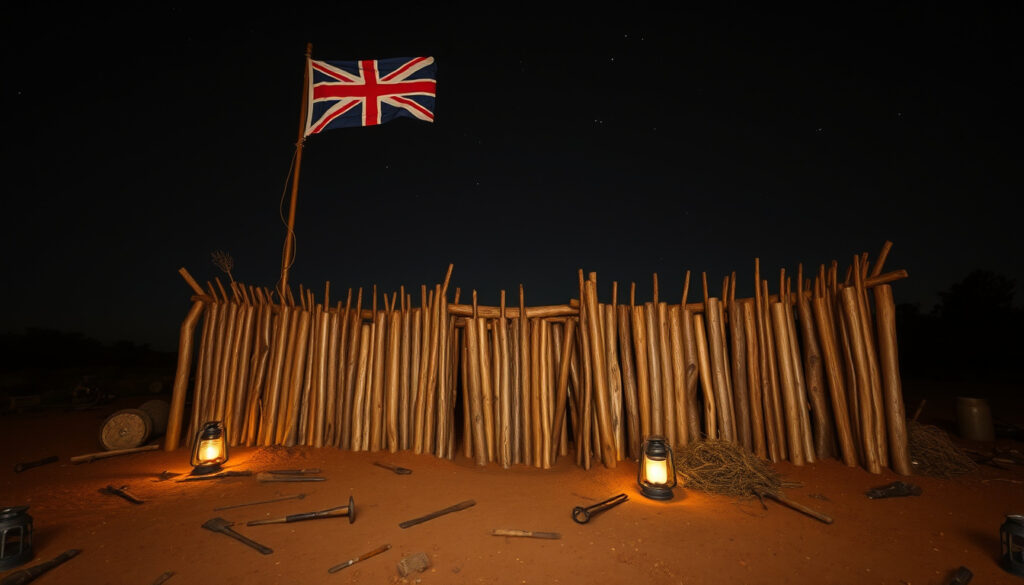
The miners had built a stockade using timber from nearby mineshafts (National Museum of Australia Digital Classroom). When soldiers stormed the position early in the morning, about 30 people died (Eureka Australia Descendants and Supporters). Lalor was among the wounded. His arm was amputated without anesthetic by a fellow miner (National Museum of Australia). He hid for days before escaping, evading capture while recovering.
The trade-off: The injury that cost Lalor his arm also gave him an unassailable credibility. He became the living symbol of the miners’ sacrifice—a one-armed rebel who had paid the price for democracy.
What happened to Peter Lalor after the Eureka Stockade?
Did he face punishment?
Lalor was initially arrested but released due to overwhelming public support (National Museum of Australia). The colonial government, under pressure, dropped charges against all Eureka prisoners (National Museum of Australia).
What political career did he have?
Within 12 months of the Eureka Stockade, Lalor became a member of parliament (Eureka Australia Descendants and Supporters). He was elected to represent Ballarat in November 1855 after the Legislative Council was enlarged to include goldfields representation (Eureka Australia Descendants and Supporters). He later became Speaker of the Legislative Assembly in 1875 and served until 1886 (Britannica encyclopedia).
Despite his rebel origins, Lalor turned into a fairly conservative politician (National Museum of Australia). He opposed women’s suffrage and supported property qualifications for voting—positions that sat uneasily with the democratic ideals his rebellion had championed.
What were his last words?
Lalor died in Melbourne on 9 February 1889 (Eureka Australia Descendants and Supporters). His reported last words were “I am quite comfortable” (Eureka Australia Descendants and Supporters), though the exact wording varies slightly by source.
The pattern: Lalor didn’t abandon his principles; he applied them selectively. He fought for representation because miners lacked it. Once the system opened, he defended its structure.
Who were Peter Lalor’s family and what was his personal life?
Did he marry?
Lalor married Alicia Dunne in 1855 (Britannica encyclopedia). She was the daughter of a hotel keeper in Ballarat.
Did he have children?
The couple had four children: two sons and two daughters (Britannica encyclopedia). One son died in infancy; the others survived to adulthood. Lalor’s brother James Lalor also played a role in Australian politics and was a member of parliament (Eureka Australia Descendants and Supporters).
What this means: Lalor’s personal life was stable and conventional—a contrast to his explosive public start. He built a family and a political career on the foundation of a rebellion that could have ended his life at 27.
What is Peter Lalor’s enduring legacy in Australia?
How is he remembered today?
Lalor is commemorated as a hero of democracy in Australia (National Museum of Australia Digital Classroom). The suburb of Lalor in Melbourne is named after him (Britannica encyclopedia). Several schools, streets, and electoral districts bear his name.
What monuments or memorials exist?
He appears on the Eureka Stockade memorial in Ballarat (National Museum of Australia). His burial site is at Boroondara Cemetery in Kew, Victoria, where a monument marks his grave (Eureka Australia Descendants and Supporters).
What was his famous quote?
Lalor’s oath at the Eureka Stockade is his most quoted words: “We swear by the Southern Cross to stand truly by each other and fight to defend our rights and liberties” (National Museum of Australia). The phrase “Southern Cross” remains a powerful symbol of Australian identity and democracy.
“We swear by the Southern Cross to stand truly by each other and fight to defend our rights and liberties.” – Peter Lalor, 1854
– Peter Lalor, Eureka Stockade oath, National Museum of Australia
Lalor’s reported last words were “I am quite comfortable” (Eureka Australia Descendants and Supporters).
Lalor’s legacy is deliberately simplified. The man who swore by the Southern Cross also defended voting restrictions. Australians have chosen to remember the rebel, not the conservative—and that itself is a political act.
Why this matters: Lalor’s complexity makes him a mirror for Australian identity: a nation built on rebellion and compromise, radical beginnings and institutional endings.
Timeline signal
- 1827 – Peter Lalor born in County Laois, Ireland (Eureka Centre Ballarat video)
- 1852 – Emigrated to Australia during the gold rush (State Library Victoria archive)
- 1854 – Led the Eureka Stockade rebellion (3 Dec) and lost his arm (National Museum of Australia)
- 1855 – Elected to the Victorian Legislative Assembly (Eureka Australia Descendants and Supporters)
- 1875 – Became Speaker of the Legislative Assembly (Britannica encyclopedia)
- 1889 – Died in Melbourne; buried in Boroondara Cemetery (Eureka Australia Descendants and Supporters)
Clarity check
Confirmed facts
- Lalor led the Eureka Stockade and lost his arm. (National Museum of Australia)
- He served as Speaker of the Victorian Legislative Assembly. (Britannica encyclopedia)
- He was born in 1827 and died in 1889. (Eureka Centre Ballarat video)
- His famous oath is widely quoted. (National Museum of Australia Digital Classroom)
What’s unclear
- Exact wording of his last words varies by source.
- Details of his early life in Ireland before emigration are sparse.
- His precise political motivations after Eureka are debated.
- The specific timeline of his early career in Australia (railway engineer vs shopkeeper) is uncertain.
Summary
Peter Lalor was neither the pure democratic hero of legend nor the cynical turncoat of revisionism. He was a practical man who seized an opportunity when history handed it to him and then worked within the system he had helped reshape. For modern Australians, the choice to embrace his complex legacy is clear: to honor the rebel who fought for representation and the politician who helped build the institutions that still govern them—even if those two figures contradict each other.
kids.kiddle.co, youtube.com, ruleoflaw.org.au, en.wikipedia.org, nla.gov.au, irishaussies.wordpress.com
Frequently asked questions
Was Peter Lalor a politician?
Yes. He was elected to the Victorian Legislative Assembly in 1855 and served as Speaker from 1875 to 1886.
Did Peter Lalor have children?
Yes, he and his wife Alicia Dunne had four children: two sons and two daughters.
What is the Eureka Stockade?
The Eureka Stockade was a rebellion by gold miners against the colonial government in Ballarat, Victoria, on 3 December 1854. It is considered a key event in Australia’s democratic development.
How old was Peter Lalor when he died?
He died on 9 February 1889 at age 62.
What did Peter Lalor do after the Eureka rebellion?
He was elected to parliament within a year, serving as a member and later as Speaker, and became a conservative politician.
Is Peter Lalor related to any other historical figures?
His brother James Lalor was also a prominent figure in Australian politics. The Lalor family had Irish nationalist roots.
Where is Peter Lalor buried?
He is buried in Boroondara Cemetery in Kew, Victoria.
Was Peter Lalor charged for his role in the rebellion?
He was initially arrested but later released due to public support; all charges against Eureka prisoners were dropped.
Related reading
- Che Guevara: Biography, Revolution, Death & Legacy – Another revolutionary leader who transitioned from rebel to political figure.
- Basil Zempilas: Biography, Family, Net Worth, and Political Career – A contemporary Australian political biography for comparison.
More related posts
 Cast of 28 Years Later: Cillian Murphy Returns & Full Cast
 Italian Near Me: Best Dublin & Ireland Restaurants
 Jameela Jamil: Disability, LGBTQ, Relationship & Family
 Adam Garcia: Latest News, Biography, and Current Projects
 Comparison Car Insurance Quotes – Save Hundreds Yearly
 Valentina Shevchenko: Personal Life, Net Worth & OnlyFans
 Moses Itauma: Record, Ethnicity, Bio & Next Fight
 Sally Bretton: Husband, Children, Illness & Career – Facts 2025
