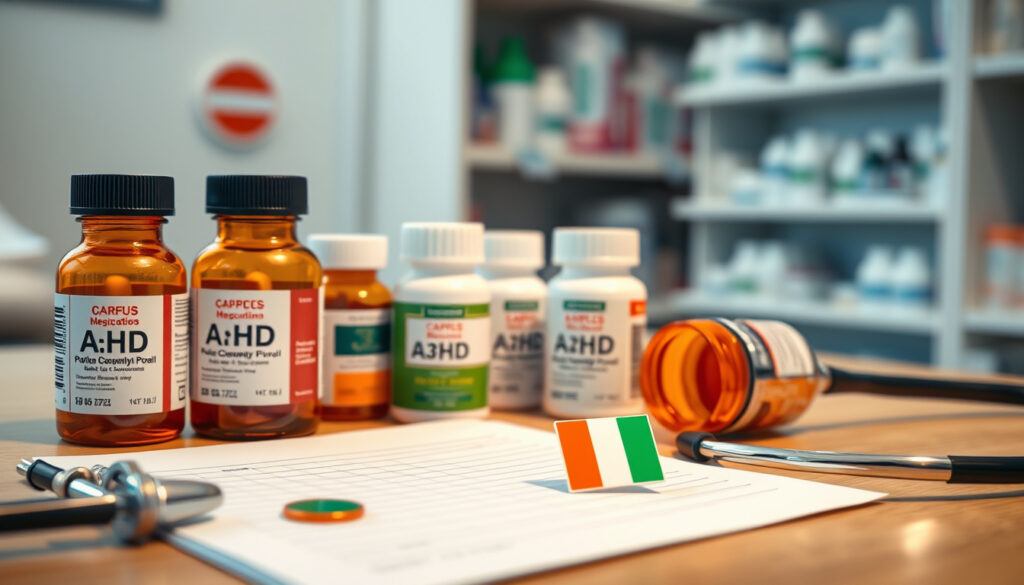
ADHD Medication in Ireland: Types, Side Effects, Pros & Cons
Few healthcare decisions spark as many questions as starting ADHD medication. If you or your child has recently received a diagnosis in Ireland, you’re likely weighing up options, wondering which drug is right, and what the real trade-offs are—so this article cuts through the noise, covering the most common ADHD medications, their side effects, and the evidence behind them to help you have a more informed conversation with your clinician.
Most common ADHD medication in Ireland: Methylphenidate (Trinity College Dublin – ADHD Research) ·
Second-line option when methylphenidate fails: Lisdexamfetamine (Tyvense) (Trinity College Dublin – ADHD Research) ·
Non-stimulant alternative: Atomoxetine for contraindications (Irish Health Pro – ADHD editorial)
Quick snapshot
- Stimulant medications are the main treatment for ADHD (Irish Health Pro)
- Methylphenidate is the most commonly prescribed ADHD medication in Ireland (Trinity College Dublin)
- Routine monitoring includes BP, heart rate and weight every six months (Irish Health Pro)
- Long-term effects of non-stimulant medications on growth and development
- Optimal duration of medication therapy for adults
- Comparative effectiveness of different stimulants across demographic groups
- Immediate-release methylphenidate lasts about 4 hours (Trinity College Dublin)
- Modified-release methylphenidate lasts 8‑12 hours (Trinity College Dublin)
- Lisdexamfetamine (Tyvense) lasts about 10 hours (Trinity College Dublin)
- Routine monitoring every six months after dose stabilisation (Irish Health Pro)
- Dose adjustments based on response and side effects
- Possible switch to second-line lisdexamfetamine if methylphenidate ineffective
Five key facts about ADHD medication in Ireland, drawn from academic and clinical sources.
| First-line treatment class | Stimulant medications (Trinity College Dublin) |
|---|---|
| Most common stimulant | Methylphenidate (Trinity College Dublin) |
| Second-line stimulant | Lisdexamfetamine (Tyvense) (Trinity College Dublin) |
| Non-stimulant options | Atomoxetine, Guanfacine (Trinity College Dublin) |
| Routine monitoring frequency | BP, heart rate, weight every 6 months (Irish Health Pro) |
| Concerta XL licence in adults | Only long-acting methylphenidate licensed for adults in Ireland (Irish Health Pro) |
| Response rate for atomoxetine | Lower than stimulants (Irish Health Pro) |
What is the most popular medication for ADHD?
Stimulant medications: methylphenidate and lisdexamfetamine
In Ireland, methylphenidate is the most commonly prescribed stimulant for ADHD (Trinity College Dublin – ADHD Research). It comes in immediate-release (lasting about 4 hours) and modified-release formulations (lasting 8–12 hours). The modified-release form, such as Concerta XL, is the only long-acting methylphenidate licensed for adults in Ireland according to one editorial source (Irish Health Pro).
Lisdexamfetamine, sold under the Irish trade name Tyvense, is the second-line stimulant option when methylphenidate does not work or causes side effects (Trinity College Dublin). It lasts roughly 10 hours per dose.
Non-stimulant alternatives
For patients who cannot tolerate stimulants or have cardiac risk factors, non-stimulant medications such as atomoxetine and guanfacine (Intuniv) are available. Guanfacine may also help reduce oppositional behaviour associated with ADHD (Trinity College Dublin). Atomoxetine has a lower response rate than stimulants (Irish Health Pro).
The implication: Starting with methylphenidate gives most patients a reliable option with robust evidence, while alternatives provide flexibility for complex cases.
What are common side effects of ADHD meds?
Common side effects of stimulant medications
- Loss of appetite, insomnia, headache, stomach ache – generally mild and manageable through dosage adjustments or timing changes (Trinity College Dublin notes that most people tolerate stimulants well with proper monitoring).
- Increased heart rate and blood pressure require monitoring: a review or dose reduction is recommended if BP exceeds 140/90 mmHg or heart rate exceeds 120 bpm on two occasions (Irish Health Pro).
Side effects of non-stimulant medications
- Atomoxetine may cause drowsiness, dry mouth, and nausea (Irish Health Pro).
- Guanfacine can cause dizziness and fatigue.
Managing side effects
Most side effects are mild and resolve with dose adjustments or by changing the timing of doses. Taking medication after breakfast helps with appetite loss, and switching to a modified-release formula can reduce end-of-dose rebound (Trinity College Dublin). Serious effects like chest pain or mood changes require immediate medical attention.
Patients and carers should track appetite, sleep, and any mood changes in the first few weeks of treatment. Most side effects are manageable with guidance from a specialist.
The catch: Active side-effect management keeps treatment effective—ignoring early signals can lead to unnecessary discontinuation.
What are the pros and cons of ADHD medication?
Benefits of ADHD medication
- Improved focus, reduced impulsivity, better academic and work performance (Trinity College Dublin – ADHD Research notes that stimulants are mainstay of treatment).
- Enhanced quality of life and daily functioning.
- Effective for 70% or more of patients.
Drawbacks and risks
- Potential side effects (appetite loss, insomnia, cardiovascular effects).
- Risk of misuse or dependence, especially with stimulants; requires supervision (Irish Health Pro emphasises routine monitoring).
- Cost and need for ongoing follow-up appointments.
Balancing medication with other treatments
Medication is most effective when combined with behavioural therapy, educational support, and lifestyle changes (Trinity College Dublin). The trade-off is clear: symptom relief often outweighs manageable side effects when treatment is properly supervised.
For most patients, the daily benefit of symptom control—better concentration, fewer impulsive decisions—outweighs the risks, as long as monitoring is consistent and side effects are actively managed.
The pattern: When weighed against untreated ADHD, the benefits of medication consistently tip the balance toward improved daily functioning.
Does ADHD improve with medication?
Effectiveness in children
Stimulant medications are effective in approximately 70–80% of children with ADHD (Trinity College Dublin). Symptoms such as inattention and hyperactivity typically reduce significantly within the first hour of taking an immediate-release dose.
Effectiveness in adults
Adults also respond well, with about 70% experiencing symptom improvement. However, the condition is chronic—medication manages symptoms but does not cure ADHD (Irish Health Pro).
Long-term outcomes
Long-term studies show that medication combined with behavioural therapy leads to better functional outcomes than medication alone. Routine monitoring every six months is recommended to assess continued efficacy and side effects (Irish Health Pro).
What this means: Symptom relief is real, but a comprehensive approach sustains gains and reduces relapse risk.
What is the first choice med for ADHD?
Stimulants as first-line therapy
International and Irish guidelines recommend stimulant medications—specifically methylphenidate—as the first-line treatment for ADHD in children, adolescents, and adults (Trinity College Dublin). The NHS and other health authorities advise starting with methylphenidate for children (Irish Health Pro).
Guidelines for children vs. adults
For children, dosing is typically weight-based and starts low. For adults, higher doses may be needed and coexisting conditions like anxiety or high blood pressure are considered before selecting a medication (Irish Health Pro).
When non-stimulants are considered
Non-stimulants like atomoxetine are reserved for patients who do not tolerate stimulants, have had no response, or have certain contraindications (e.g., cardiac risk) (Trinity College Dublin). Guanfacine is another non-stimulant option, particularly when oppositional behaviour is a concern.
Upsides
- Stimulants have a strong evidence base across age groups (Trinity College Dublin)
- Multiple formulations allow individualised dosing schedules
- Non-stimulants provide alternatives for complex patients
Downsides
- Stimulants require careful cardiovascular monitoring (Irish Health Pro)
- Non-stimulant response rates are lower
- Access to certain formulations may be restricted by licensing (e.g., Concerta XL only adult long-acting methylphenidate in Ireland)
“Methylphenidate is the most commonly used ADHD medication in Ireland.”
— Trinity College Dublin, ADHD Research Group
“Stimulant medications are the main treatment used for ADHD.”
— Irish Health Pro, ADHD editorial
Clarity check
Confirmed facts
- Methylphenidate is the most commonly prescribed first-line medication in Ireland (Trinity College Dublin)
- Stimulants are the main treatment for ADHD (Irish Health Pro)
- Routine monitoring includes BP, heart rate and weight every six months (Irish Health Pro)
What’s unclear
- Long-term effects of non-stimulants on growth and development are still being studied
- Optimal duration of medication therapy for adults is not fully established
- Comparative effectiveness of different stimulants across demographic groups needs more research
The picture is reassuringly clear for short- and medium-term use: stimulant medications are safe and effective when monitored properly. For Irish families and adults, the immediate benefits of symptom control—better attention, less impulsivity—are well documented. The open questions about long-term non-stimulant effects and optimal therapy duration highlight the need for ongoing medical follow-up. For anyone considering ADHD medication in Ireland, the first step is a specialist assessment that includes cardiac history, a discussion of lifestyle factors, and a clear monitoring plan. The choice between methylphenidate, lisdexamfetamine, or a non-stimulant depends on individual response and tolerance—but Irish guidelines recommend starting with methylphenidate and adjusting as needed.
bmjopen.bmj.com, reddit.com, mediconline.ie, spunout.ie, adult.adhdirl.ie, adult.adhdirl.ie, irishhealthpro.com, adhdireland.ie, hse.ie, pmc.ncbi.nlm.nih.gov
For a broader overview of the types of ADHD medication available, including stimulants and non-stimulants, readers can consult types of ADHD medication available.
Frequently asked questions
How long does ADHD medication take to work?
Immediate-release methylphenidate starts working within 30–60 minutes and lasts about 4 hours (Trinity College Dublin). Modified-release formulations take slightly longer to peak but last 8–12 hours.
Can ADHD medication be taken long-term?
Yes, with routine monitoring of blood pressure, heart rate, and weight every six months (Irish Health Pro). Medication does not cure ADHD but manages symptoms over time.
Is ADHD medication safe for children?
When properly prescribed and monitored, stimulant medications are safe for children. Guidelines recommend starting with a low dose and titrating up. Monitoring growth and side effects is standard practice (Trinity College Dublin).
What is the difference between Ritalin and Adderall?
Ritalin contains methylphenidate; Adderall contains amphetamine salts. In Ireland, methylphenidate (Ritalin, Concerta) is first-line. Adderall is not licensed here; the closest equivalent is lisdexamfetamine (Tyvense), a prodrug of dextroamphetamine (Trinity College Dublin).
Can ADHD medication be used with behavioural therapy?
Yes—combination therapy is considered the gold standard. Medication controls core symptoms, while therapy addresses coping strategies and behavioural patterns (Irish Health Pro).
Are there any dietary restrictions while taking ADHD medication?
No specific restrictions, but taking medication after a protein-rich breakfast can help with appetite loss. Avoid high doses of caffeine, as it can worsen side effects like insomnia and tachycardia.
What should I do if I miss a dose?
If you miss a dose, take it as soon as you remember—unless it is close to the next dose. Never double up. Consult your prescriber for a written plan (Trinity College Dublin).
More related posts
 Alan Joyce: What Happened After Qantas
 Tucker Wetmore: Biggest Hit, Ex-Girlfriend, Net Worth & Bio
 Sarah Hyland: Health, Wedding, Modern Family Questions
 Comparison Car Insurance Quotes – Save Hundreds Yearly
 S&P 500: Returns If You Invested $1,000 10/20 Years Ago
 When Does Implantation Bleeding Occur – Timing, Signs and Period Differences
 Salicylic Acid Cleanser: Benefits, Usage & Safety Guide
 Houston Rockets vs Phoenix Suns Match Player Stats
