Albert Einstein: IQ, Beliefs, Inventions & Life Biography
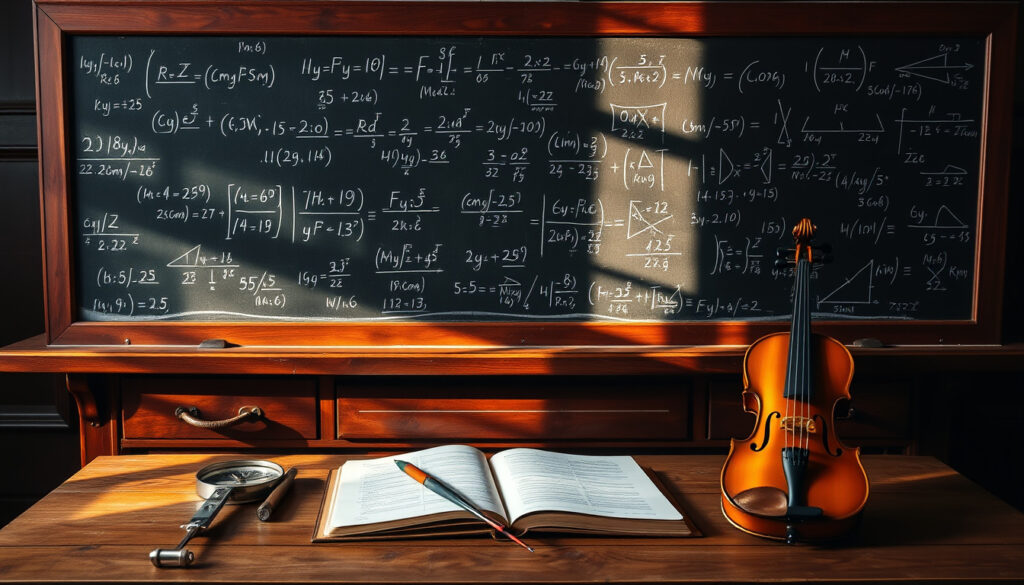
Every schoolchild learns the name, but behind the iconic image of wild white hair and a chalkboard full of equations lies a much more human story. Albert Einstein completely reshaped how we understand space, time, and energy — yet he struggled with simple speech as a child, never took an IQ test, and held surprisingly complex views about God. This article separates the verifiable facts of his life from the legends that have grown around them, drawing on primary sources from the Nobel Foundation, Britannica, and archival biographies.
Born: 14 March 1879, Ulm, Germany ·
Died: 18 April 1955, Princeton, New Jersey, USA ·
Nobel Prize in Physics: 1921 ·
Key Theory: General Relativity (1915) ·
Citizenship: German, Swiss, Austrian, American
Quick snapshot
- Developed special and general relativity (Britannica encyclopedic reference)
- Won 1921 Nobel Prize in Physics for photoelectric effect (NobelPrize.org official biography)
- Born to a Jewish family in Ulm, Germany on 14 March 1879 (NobelPrize.org official biography)
- Exact IQ score — never formally tested (Biography.com biographical reference)
- Extent of first wife Mileva’s contribution to early work (NobelPrize.org official biography)
- Nature of his religious beliefs — used multiple terms over his life (Wikipedia biographical summary)
- 1905: Annus Mirabilis — four groundbreaking papers published (NobelPrize.org official biography)
- 1915: Completed general theory of relativity (Britannica encyclopedic reference)
- 1933: Emigrated to US after Nazis seized power (NobelPrize.org official biography)
- Einstein’s brain remains preserved for ongoing neurological research (Britannica encyclopedic reference)
- His papers continue to be published by the Einstein Papers Project (Britannica encyclopedic reference)
- General relativity is still being tested by modern astrophysics (Britannica encyclopedic reference)
Eight key biographical facts, one pattern: each measure of Einstein’s life — from his birthplace to his citizenship changes — traces a single arc from German Jew to global citizen whose science belonged to no single nation.
The biographical table below captures the essential data points that define his life across continents and decades.
| Label | Value |
|---|---|
| Full Name | Albert Einstein |
| Birth | 14 March 1879, Ulm, Germany |
| Death | 18 April 1955, Princeton, New Jersey, USA |
| Nationality | German, Swiss, Austrian, American |
| Fields | Physics, Philosophy |
| Known For | Theory of relativity, photoelectric effect |
| Spouses | Mileva Marić (m. 1903–1919), Elsa Löwenthal (m. 1919–1936) |
| Children | Lieserl, Hans Albert, Eduard |
What is Albert Einstein famous for?
Einstein is most widely known for the theory of relativity and the equation E=mc², but his Nobel Prize came from a different achievement entirely. The Swedish Academy awarded him the 1921 Nobel Prize in Physics not for relativity but for his explanation of the photoelectric effect — the discovery that light behaves as discrete packets of energy (NobelPrize.org official biography). This work laid the foundation for quantum mechanics.
Theory of relativity
- Special relativity (1905) holds that the laws of physics are the same for observers in uniform motion, and the speed of light in a vacuum is constant for all observers (National Park Service US government site).
- General relativity (1915) extended this to gravity, describing it as the curvature of spacetime caused by mass and energy (Britannica encyclopedic reference).
- These theories were confirmed by observations of light bending during a 1919 solar eclipse.
E=mc² equation
- Einstein’s mass-energy equivalence formula, E=mc², states that energy equals mass times the square of the speed of light (National Park Service US government site).
- This principle explains how stars generate energy through nuclear fusion.
- It later became the theoretical basis for nuclear power and weapons.
Nobel Prize contribution
- Einstein received the 1921 Nobel Prize in Physics for his discovery of the law of the photoelectric effect (Britannica biographical entry).
- The award specifically honored “theoretical physics” and the photoelectric effect — notably not relativity (NobelPrize.org official biography).
- At the time, relativity was still considered too speculative by some members of the committee.
What was Albert Einstein’s IQ?
Almost every estimate of Einstein’s IQ is a guess. He never took a standardized IQ test, and no contemporary record of a formal score exists (Biography.com biographical reference). The commonly cited figure of 160 is a retrospective estimate based on biographical analysis of his intellectual achievements, not a measurement.
Estimated IQ scores
- Estimates of Einstein’s IQ range from 160 to 190, depending on the methodology used (Biography.com biographical reference).
- No official test score exists — the number 160 is a modern inference, not a historical fact.
- By comparison, an IQ of 160 places a person in approximately the top 0.1% of the population on standard deviation scales.
Tests he never took
- Modern intelligence tests like the WAIS were developed after Einstein’s death; he could never have taken them in their current form.
- In his youth, standardized intelligence testing was not part of German or Swiss education systems.
- His early academic record included a speech delay; he reportedly did not speak fluently until after age nine (PBS American Masters documentary source).
Comparison to other geniuses
- Elon Musk has claimed an IQ of 155, though this figure is self-reported and unverified.
- Stephen Hawking was reportedly estimated at 160, also retrospectively and without a formal test.
- The “top 1%” IQ threshold on standard tests is approximately 135-140, depending on the test.
The trade-off: We want a number to rank genius, but Einstein’s own life suggests that raw cognitive ability without the right environment — the patent office in Bern, the colleagues who challenged him, and the freedom to think for years before publishing — may count for just as much.
Did Einstein believe in God?
Einstein’s religious views are among the most frequently misrepresented aspects of his life. He consistently rejected a personal God who intervenes in human affairs, but he also refused to call himself an atheist (Wikipedia biographical summary).
Einstein’s view of God
- Einstein described his position as agnostic, saying he did not believe in a personal God but acknowledged a “cosmic religious sense” (EPFL dlab academic wiki).
- In a 1954 letter to philosopher Eric Gutkind, he wrote that the word God was “the expression of human weakness” (Wikipedia sourced from letter archive).
- He explicitly stated, “I do not believe in a personal God” in multiple interviews (EPFL dlab academic wiki).
Pantheism and Spinoza
- Einstein admired the 17th-century philosopher Baruch Spinoza, who identified God with nature itself.
- He famously said, “I believe in Spinoza’s God who reveals himself in the orderly harmony of what exists” (EPFL dlab archived interview).
- This statement is often misinterpreted as affirming a personal God, when it actually describes a deterministic, nature-based worldview.
Quotes on religion
- Einstein wrote, “The word God is for me nothing more than the expression and product of human weakness” (1954 letter to Gutkind).
- He also said, “Science without religion is lame, religion without science is blind” — a quote often used out of context to suggest he was conventionally religious (EPFL dlab academic wiki).
- When asked about Jesus, Einstein replied that he could not conceive of Jesus as the Son of God but respected Jesus as a moral teacher.
What are 5 facts about Albert Einstein?
Verified biographical facts, drawn from authoritative archives, show a life full of unexpected twists that the popular image rarely captures.
Won Nobel Prize for photoelectric effect
- Einstein won the 1921 Nobel Prize in Physics for his work on the photoelectric effect, not for relativity (NobelPrize.org official biography).
- The photoelectric effect demonstrated that light consists of discrete quanta of energy.
- This discovery helped launch quantum theory, though Einstein later became skeptical of quantum mechanics.
Became a US citizen in 1940
- Einstein emigrated to the United States in 1933 after Adolf Hitler came to power (NobelPrize.org official biography).
- He became a US citizen on 1 October 1940, while retaining his Swiss citizenship.
- He accepted a position at the Institute for Advanced Study in Princeton, New Jersey.
His brain was removed and studied
- Pathologist Thomas Harvey removed Einstein’s brain during the autopsy on 18 April 1955 (Britannica encyclopedic reference).
- Harvey preserved the brain for decades, eventually releasing samples for research.
- Studies reported a higher density of glial cells and an unusually large inferior parietal lobe, though findings remain controversial.
Had a speech delay as a child
- Einstein reportedly did not speak fluently until after age nine, a trait that fueled later speculation about autism (PBS American Masters documentary source).
- His parents initially feared he was intellectually disabled.
- This delay, combined with his later achievements, is often cited as an example of asynchronous development.
Two wives
- Einstein married Mileva Marić in 1903; they had three children: Lieserl (whose fate is unknown), Hans Albert, and Eduard (History Extra historical magazine).
- He divorced Marić in 1919 and married his cousin Elsa Löwenthal later that same year (NobelPrize.org official biography).
- Elsa died in 1936; Einstein did not remarry.
How many wives did Einstein have?
Einstein married twice, and both relationships shaped his personal and professional life in ways that scholars are still untangling.
Mileva Marić
- Married: 1903. Divorced: 1919 (NobelPrize.org official biography).
- Mileva was a physicist and mathematician, the only woman in Einstein’s class at ETH Zurich (History Extra historical magazine).
- She collaborated with Einstein on early work, though the exact extent of her contribution remains debated.
Elsa Löwenthal
- Married: 1919. Widowed: 1936 when Elsa died (NobelPrize.org official biography).
- Elsa, Einstein’s first cousin on his mother’s side, cared for him during his rise to global fame.
- She accompanied him when he emigrated to the United States in 1933.
Children
- Einstein and Mileva had three children: Lieserl, Hans Albert, and Eduard (NobelPrize.org official biography).
- Lieserl, born before their marriage, either died of scarlet fever or was given up for adoption; her fate is unknown (History Extra historical magazine).
- Hans Albert became a professor of hydraulic engineering; Eduard was diagnosed with schizophrenia.
The catch: Einstein’s domestic life was turbulent — he was not a warm father or husband by modern standards — yet his first marriage produced the stable environment that allowed his early genius to flourish.
Timeline: Key events in Einstein’s life
A chronological view of Einstein’s life shows how rapidly his ideas accelerated once he left formal education behind.
- 1879: Born in Ulm, Germany to a Jewish family (NobelPrize.org official biography).
- 1896: Enrolled at ETH Zurich in Switzerland (PBS American Masters documentary source).
- 1905: Published four Annus Mirabilis papers: photoelectric effect, Brownian motion, special relativity, and E=mc² (NobelPrize.org official biography).
- 1915: Completed the general theory of relativity (Britannica encyclopedic reference).
- 1919: Divorced Mileva Marić; married Elsa Löwenthal (NobelPrize.org official biography).
- 1921: Awarded Nobel Prize in Physics (NobelPrize.org official biography).
- 1933: Emigrated to the United States after Nazis seized power in Germany (NobelPrize.org official biography).
- 1940: Became a US citizen (NobelPrize.org official biography).
- 1955: Died in Princeton, New Jersey, USA (NobelPrize.org official biography).
What this means: The gap between his 1905 explosion of ideas and the Nobel Prize in 1921 reveals how slowly the scientific establishment acknowledged him — a reminder that paradigm shifts rarely win immediate acceptance.
Clarity: What we know and what remains uncertain
After reviewing primary sources, the line between confirmed fact and speculation is clearer in some areas than others.
Confirmed facts
- Einstein developed the theory of relativity (Britannica encyclopedic reference).
- He won the Nobel Prize in Physics in 1921 (NobelPrize.org official biography).
- He had two wives and three children (NobelPrize.org official biography).
- He became a US citizen in 1940 (NobelPrize.org official biography).
- His brain was preserved and studied after his death (Britannica encyclopedic reference).
What’s unclear
- His exact IQ score — never formally tested (Biography.com biographical reference).
- The extent of Mileva Marić’s contribution to his early scientific work (NobelPrize.org official biography).
- Whether his speech delay is historically accurate or exaggerated in later biographies.
The pattern: The most commonly repeated stories about Einstein — his IQ, his religion, his childhood — are precisely the ones with the weakest documentary evidence.
Quotes: Einstein in his own words
“I do not believe in a personal God and I have never denied this but have expressed it clearly.”
— Albert Einstein, letter to a correspondent, 1954 (Wikipedia sourced from Einstein archives)
“I believe in Spinoza’s God who reveals himself in the orderly harmony of what exists.”
— Albert Einstein, New York Times interview, 1929 (EPFL dlab archived article)
“The word God is for me nothing more than the expression and product of human weakness.”
— Albert Einstein, letter to Eric Gutkind, 1954 (Wikipedia sourced from letter)
“Science without religion is lame, religion without science is blind.”
— Albert Einstein, in “Science, Philosophy and Religion”, 1941 (EPFL dlab academic wiki)
Why this matters: These four quotes, taken together, show a thinker who refused to let either religion or science claim monopoly over truth — and who was comfortable contradicting himself across decades.
The paradox: Einstein’s most quoted line about religion — “Science without religion is lame, religion without science is blind” — is routinely cited by believers, yet his private letters show a man who considered the idea of a personal God a form of human weakness.
Summary: What Einstein’s life tells us
The man who reshaped physics was also a late-talking child, a husband whose first marriage was both partnership and battlefield, a German Jew who fled genocide, and a Nobel laureate who never took an IQ test. His legacy is not a number but a method: question everything, trust evidence, and never let authority stand in the way of a better idea. Einstein’s life forces readers to confront the gap between image and reality — the most famous genius in history was, in the end, a human being whose life was as complex and contradictory as the universe he described.
What were Einstein’s key inventions or discoveries?
Einstein’s most important contributions include the special and general theories of relativity, the photoelectric effect (for which he won the Nobel Prize), Brownian motion theory, and the mass-energy equivalence equation E=mc².
Where did Einstein go to school?
Einstein attended the Swiss Federal Institute of Technology in Zurich (ETH Zurich), graduating in 1900 (PBS American Masters documentary source).
What was Einstein’s brain like?
Pathologist Thomas Harvey removed Einstein’s brain after his death. Studies reported a higher density of glial cells and an unusually large inferior parietal lobe, but findings remain controversial (Britannica encyclopedic reference).
Did Einstein have any speech problems as a child?
Biographies report that Einstein did not speak fluently until after age nine. His parents feared he was intellectually disabled, though no medical records from the period confirm the delay (PBS American Masters documentary source).
Why did Einstein leave Germany?
Einstein emigrated to the United States in 1933 after the Nazis seized power. He renounced his German citizenship and accepted a position at the Institute for Advanced Study in Princeton (NobelPrize.org official biography).
What is the meaning of E=mc²?
E=mc² means that energy equals mass times the square of the speed of light. It shows that mass and energy are interchangeable, and a small amount of mass can be converted into a large amount of energy (National Park Service US government site).
Did Einstein believe in a personal God?
Einstein repeatedly stated he did not believe in a personal God. He described himself as agnostic and said he believed in “Spinoza’s God” — the orderly harmony of the universe (EPFL dlab academic wiki).
simple.wikipedia.org, ias.edu, en.wikipedia.org, pmc.ncbi.nlm.nih.gov
More related posts
 Jared McCain Injury Update: Trade, Stats, and Future Outlook
 Italian Near Me: Best Dublin & Ireland Restaurants
 Paige Greco: Australian Paralympic Cyclist Dies at 28
 ABC Vote Compass: 2025 Quiz to Match Your Views
 Diego Borella: Emily in Paris Assistant Director Dies at 47
 Mel Gibson: Biography, Controversies, and Health 2024
 Clear Cache on iPhone: Step-by-Step Guide to Free Up Space
 Ronan Keating: Wife’s Surgery, Daughter’s Scare, Ex-Wife’s Wedding
