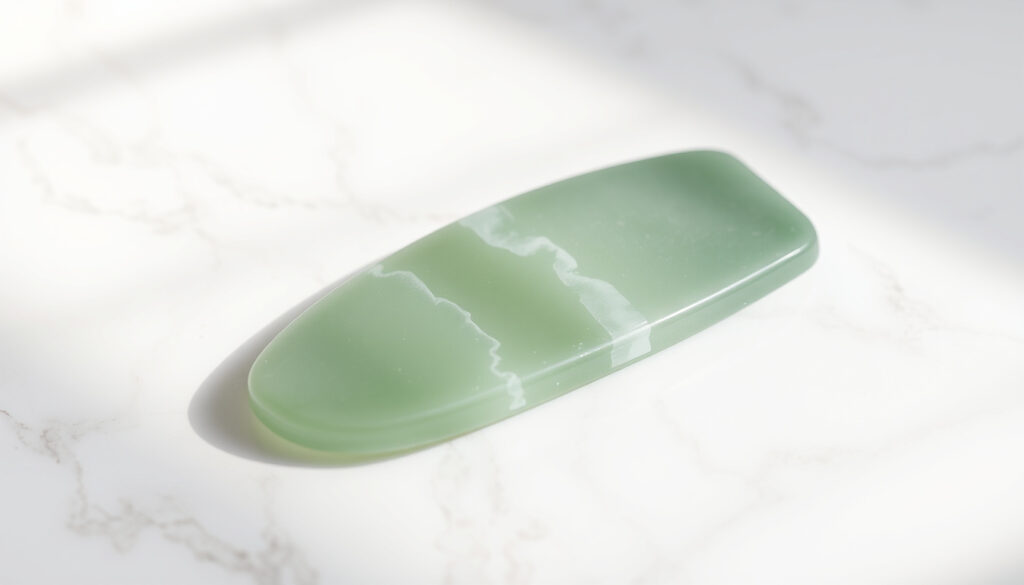
Gua Sha Tool: Benefits, How to Use & Does It Work?
If you’ve spent any time scrolling skincare content lately, you’ve probably seen a gua sha tool sitting in someone’s bathroom cabinet or popping up in your favorite influencer’s morning routine. These smooth-edged scraping stones — typically made from jade, rose quartz, or stainless steel — promise to depuff your face, define your jawline, and give your skin a healthy glow without expensive clinic visits. But dermatologists and plastic surgeons have actual thoughts about whether those promises hold up under scrutiny. This guide cuts through the marketing noise with expert perspectives, what research actually shows, and a practical roadmap for using one safely.
Primary Benefit: Lymphatic drainage · Common Materials: Stainless steel or jade · Origin: Traditional Chinese medicine · Reported Effect: Reduces puffiness · Usage Frequency: 3–5 times per week
Quick snapshot
- Gua sha increases microcirculation fourfold during treatment PubMed microcirculation study (2007)
- Short-term de-puffing through lymphatic drainage is well-documented Medical News Today review
- Side effects like bruising typically resolve within 3–4 days WebMD clinical guidance
- Long-term wrinkle reduction lacks robust clinical evidence McGill OSS critical analysis
- Collagen stimulation claims remain scientifically unverified Women’s Health Mag dermatologist overview
- Optimal frequency for different skin types not well-studied Cleveland Clinic clinical review
- 2007: Microcirculation study established physiological basis PubMed original research
- 2017: Back pain comparison trial showed sustained benefit over heat therapy Healthline body benefits overview
- 2024: Parkinson’s RCT demonstrated effects on motor function and sleep Healthline clinical findings
- Larger RCTs needed to confirm facial contouring claims PMC systematic review on pain management
- Growing dermatologist integration into mainstream skincare routines (PMC systematic review on pain management)
- Material innovations (stainless steel, cooling variants) expanding market (PMC systematic review on pain management)
This table summarizes the key specifications and usage parameters for gua sha tools based on clinical guidance.
| Attribute | Details |
|---|---|
| Definition | Smooth-edged tool for skin scraping |
| Main Use | Facial massage for drainage |
| Evidence Level | Anecdotal + circulation studies |
| Best For | Puffiness and tension |
| Recommended Angle | 35–45 degrees to skin WebMD technique guide |
| Study Duration | 8 weeks for measurable contour changes |
| Usage Protocol | 5 times per week showed improvement in facial contour Women’s Health Mag clinical summary |
Do gua sha tools actually work?
The short answer is nuanced: gua sha produces measurable short-term effects, but its long-term anti-aging claims rest on thinner evidence. Research from PubMed shows that gua sha increases microcirculation by a factor of four at the treated site, with that peak lasting approximately 7.5 minutes before gradually declining PubMed microcirculation study (2007). This surge in blood flow delivers more oxygen and nutrients to skin cells, which explains why many users report an immediate glow after a session.
Science behind gua sha
The mechanism driving gua sha’s effects is increased microcirculation. When you glide the tool across skin at the correct 35–45 degree angle, you’re creating localized pressure that dilates blood vessels and stimulates lymphatic fluid movement beneath the surface WebMD technique guidance. The Cleveland Clinic notes that this response triggers an anti-inflammatory cascade, which may explain why some users experience temporary relief from facial tension or muscle soreness Cleveland Clinic clinical perspective.
- Fourfold increase in perfusion units during active treatment PubMed original research
- Immediate myalgia decrease observed both locally and at distant sites PubMed pain management findings
- Lymphatic drainage reduces fluid retention in facial tissues Medical News Today lymphatic overview
Expert opinions
“Gentle pressure stimulates blood flow, helping to deliver oxygen and nutrients to the skin, can improve radiance and reduce puffiness,”
— Pooja Rambhia, MD, board-certified dermatologist Women’s Health Mag expert interview
Marisa Garshick, another board-certified dermatologist, notes that “using a gua sha can enhance the absorption of serums and oils” by massaging them into freshly dilated skin Women’s Health Mag absorption guidance. However, experts urge caution about claims extending beyond these physiological effects.
What are the downsides of gua sha?
Gua sha isn’t without risk. The same mechanism that creates that sought-after glow can also break capillaries under the skin, producing petechiae — those red or purple marks that signal microbleeding from tiny blood vessels Healthline safety overview. Side effects including bruising, discoloration, and soreness typically resolve within 3–4 days according to WebMD, but aggressive technique or underlying health conditions can extend or worsen these outcomes.
Common side effects
- Bruising lasting 3–4 days WebMD clinical guidance
- Petechiae from broken capillaries Healthline risk assessment
- Muscle soreness if pressure is too aggressive Cleveland Clinic practitioner notes
- Infection risk if tool isn’t properly sanitized McGill OSS safety analysis
Who should avoid it
Certain groups should skip gua sha entirely or consult a physician first. According to WebMD, this includes individuals who are diabetic, have poor circulation, are on blood thinners, are pregnant, or have received recent facial injectables WebMD contraindication list. You should also avoid gua sha over cuts, infections, sunburn, or existing bruising Curology skin condition warnings.
Some users report feeling fatigued or “sick” after gua sha sessions. While not medically confirmed as a universal phenomenon, practitioners note this may relate to the release of stored metabolic waste from lymphatic tissues — a reminder that your body processes what the technique mobilizes.
How often should you use a gua sha tool?
Consistency matters more than frequency. A study in the Journal of Cosmetic Dermatology found that participants using gua sha 5 times per week for 8 weeks showed measurable improvement in facial contour Women’s Health Mag clinical summary. However, using gua sha daily risks irritation, especially for sensitive skin types. Most dermatologists recommend spacing sessions 3–5 times weekly to balance results with skin recovery time.
Beginner schedule
- Start with 2–3 sessions per week
- Keep each session under 5 minutes
- Use light pressure until your skin adjusts
- Always apply a facial oil or serum as lubricant
Advanced routine
For those building toward the study’s protocol, gradually increase to 5 sessions weekly. A facial plastic surgeon notes that consistent use over the neck and jowls showed visible reduction in jowl appearance after approximately two weeks of twice-daily use YouTube Dermatologist practical demonstration. However, this timeline is individual and depends heavily on starting skin condition and technique.
Three to five sessions per week for at least 8 weeks appears to be the minimum commitment for observable contour changes. Daily use is unnecessary and may increase bruising risk without accelerating results.
How long should I gua sha to see results?
Results from gua sha operate on two timescales: immediate and cumulative. The fourfold microcirculation boost peaks within minutes of treatment and fades over 7.5 minutes PubMed perfusion analysis, which means you see temporary de-puffing right after each session. Cumulative changes — particularly around facial contouring and reduced appearance of jowls — require weeks of consistent practice.
Short-term effects
- Reduced puffiness visible immediately post-session
- Enhanced absorption of serums and oils applied afterward
- Temporary glow from increased blood flow to surface tissues
Long-term outcomes
Research from the Journal of Cosmetic Dermatology suggests 8 weeks of consistent use (5 times weekly) produces measurable changes in facial contour Women’s Health Mag long-term study summary. A comparison study with facial rollers found that gua sha reduces muscle tone more effectively, while rollers improve skin elasticity more — suggesting different mechanisms that may complement each other PMC comparative efficacy study.
If you’re buying a gua sha hoping to reshape your jawline in two weeks, you’ll likely be disappointed. The evidence supports cumulative changes over 6–8 weeks, not instant transformations. Think of it as a maintenance practice, not a quick fix.
What do dermatologists and plastic surgeons think about gua sha?
Medical professionals generally view gua sha favorably for its non-invasive, low-risk approach to skin health — provided users manage expectations about what it can and cannot do. The McGill Office for Science and Society notes that studies on gua sha benefits tend to be small and prone to placebo effects, which means anecdotal success stories may not translate to universal results McGill OSS evidence critique. However, the physiological mechanisms (circulation, lymphatic drainage) are real, even if long-term anti-aging claims remain unverified.
Dermatologist views
“Using a gua sha can enhance the absorption of serums and oils,”
— Marisa Garshick, MD, board-certified dermatologist Women’s Health Mag expert interview
Dermatologists appreciate that gua sha offers a drug-free complement to skincare routines. Dr. Pooja Rambhia highlights the circulation benefits and notes that regular use supports overall skin health through improved nutrient delivery Women’s Health Mag dermatologist perspectives. The Cleveland Clinic’s clinical review acknowledges gua sha’s benefits for relieving conditions beyond skincare, including breast engorgement in breastfeeding mothers Cleveland Clinic maternal health findings and chronic back pain Healthline pain management overview.
Surgeon recommendations
“Gentle pressure stimulates blood flow, helping to deliver oxygen and nutrients to the skin, can improve radiance and reduce puffiness,”
— Pooja Rambhia, MD, board-certified dermatologist Women’s Health Mag surgeon comparison
Facial plastic surgeons tend to be more measured, viewing gua sha as a supportive technique rather than a structural solution. Anos Plastic Surgery notes that gua sha “stimulates the lymphatic system, reduces puffiness, and may boost collagen” — though they acknowledge the collagen claim is theoretical rather than proven Anos Plastic Surgery clinical assessment. Surgeons generally recommend gua sha for patients seeking non-surgical maintenance between procedures.
Material and specifications
Five material options dominate the market, each with distinct characteristics that affect performance, durability, and price point.
This comparison table details the properties, ideal use cases, and practical considerations for each gua sha material option.
| Material | Properties | Best For | Considerations |
|---|---|---|---|
| Jade | Traditional, cooling sensation, natural stone | Beginners, aesthetics | Porous — requires frequent cleaning |
| Rose Quartz | Softer than jade, gentle on skin | Sensitive skin | Can chip if dropped |
| Stainless Steel | Non-porous, easy to sanitize, temperature-responsive | Hygiene-focused users | Heavier feel |
| Bian Stone | Traditional Chinese material, believed therapeutic properties | Traditional practice adherence | Rarer, higher price |
| Amethyst | Claimed calming properties, durable | Wellness-focused routines | Marketing-heavy claims |
Upsides
- Non-invasive and drug-free
- Measurable short-term circulation benefits
- Supports serum and oil absorption
- Reduces facial puffiness temporarily
- Low cost compared to professional treatments
- Easy to use at home with minimal training
Downsides
- Long-term anti-aging claims lack robust evidence
- Risk of bruising, petechiae, and infection
- Small studies prone to placebo effects
- Contraindicated for many medical conditions
- Porous materials harbor bacteria if not cleaned properly
- Results temporary without consistent long-term commitment
How to use a gua sha tool
Proper technique separates beneficial gua sha from harmful over-scraping. Follow these steps for safe, effective sessions.
- Start clean: Wash your face and your gua sha tool with soap and water or a gentle cleanser.
- Apply lubricant: Use 2–3 drops of facial oil or water-based serum. Never scrape dry skin.
- Hold at angle: Position the gua sha at 35–45 degrees to your skin WebMD technique guidance.
- Start at jawline: Place the tool at your chin and scrape outward toward your ears along the jawline. Repeat 5–10 times each side.
- Move to cheeks: Sweep upward and outward from the nose area toward the hairline.
- Treat under eyes gently: Use light pressure only, sweeping from the inner corner to the temple.
- Finish at forehead: Glide outward from the center of your forehead toward your temples.
- Clean after use: Rinse the tool thoroughly and dry completely before storing.
The lymphatic system moves toward the collarbone, not away from it. Some practitioners recommend downward strokes on the neck rather than upward face movements — conflicting advice that reflects the technique’s origins in body work rather than specialized facial practice.
What the research says: cleared-up facts versus ongoing questions
Understanding what’s confirmed versus what’s still uncertain helps you set realistic expectations.
This research summary table presents the current state of evidence for key gua sha claims, organized by claim type.
| Claim Status | Evidence | Source |
|---|---|---|
| Enhances blood flow | Confirmed — fourfold microcirculation increase | PubMed (2007) |
| Temporary de-puffing | Confirmed — lymphatic drainage mechanism | Medical News Today, Women’s Health Mag |
| Wrinkle reduction long-term | Unclear — no large RCTs | McGill OSS |
| Collagen stimulation proof | Unclear — theoretical, not measured | Women’s Health Mag |
| Pain relief (body) | Supported for back pain vs heat therapy | Healthline (2017), Parkinson’s RCT (2024) |
The pattern emerging from research is clear: gua sha’s physiological effects on circulation and lymphatic drainage are real and measurable. Its application for facial sculpting and anti-aging, however, lacks the large-scale, placebo-controlled trials needed to move these claims from theoretical to confirmed. A PMC systematic review found insufficient evidence for gua sha in pain management broadly, calling for better-designed RCTs PMC systematic review on pain management efficacy.
What experts say about gua sha
“Gentle pressure stimulates blood flow, helping to deliver oxygen and nutrients to the skin, can improve radiance and reduce puffiness,”
— Pooja Rambhia, MD, board-certified dermatologist Women’s Health Mag expert interview
“Using a gua sha can enhance the absorption of serums and oils,”
— Marisa Garshick, MD, board-certified dermatologist Women’s Health Mag absorption guidance
Gua sha caused a fourfold increase in microcirculation perfusion units at the treated area for the first 7.5 minutes.
— Study authors PubMed microcirculation research
The experts consistently highlight circulation benefits and enhanced product absorption as gua sha’s strongest use cases. Their reservations center on overclaiming anti-aging effects without supporting clinical data.
For anyone considering a gua sha tool, the practical advice is straightforward: approach it as a daily wellness habit that temporarily depuffs and supports skin health, not a miracle contouring device. Clean your tool after every use, start with gentle pressure, and if you have underlying health conditions or take blood thinners, have a conversation with your dermatologist before adding it to your routine. The people most likely to benefit are those who want a low-effort, non-invasive complement to their existing skincare — not a replacement for professional treatments or clinical interventions.
Related reading: Cod Liver Oil Benefits and Risks
When choosing your gua sha tool for optimal skin benefits, the Swedish gua sha stone test highlights top-tested stones rooted in ancient Chinese therapy.
Frequently asked questions
What is a gua sha tool made of?
Most gua sha tools are made from jade, rose quartz, stainless steel, bian stone, or amethyst. Stainless steel is non-porous and easiest to sanitize, while jade and rose quartz are traditional choices with natural cooling properties.
Can gua sha tools cause bruising?
Yes. Aggressive technique, excessive pressure, or using gua sha over broken capillaries can cause bruising that typically resolves within 3–4 days WebMD clinical guidance. Using light pressure and avoiding areas with visible veins reduces this risk.
Is gua sha safe during pregnancy?
WebMD recommends avoiding gua sha if you’re pregnant. Consult your healthcare provider before using any scraping technique during pregnancy.
What oil to use with gua sha tool?
Facial oils like jojoba, rosehip, or argan oil work well. Some practitioners use water-based serums. The key is applying enough lubricant to allow smooth gliding — never scrape dry skin.
Can gua sha replace professional massage?
No. While gua sha offers temporary relaxation and circulation benefits, it cannot replace therapeutic massage for musculoskeletal issues. A 2017 study showed gua sha outperformed heat packs for back pain specifically, but professional treatment addresses deeper tissue work.
How to clean a gua sha tool?
Wash with warm water and mild soap after each use. For porous materials like jade, consider weekly deep cleaning with a gentle brush. Stainless steel can be sanitized with rubbing alcohol. Always dry completely before storing.
Does gua sha work on body?
Yes. Gua sha originated as a body technique for conditions like back pain and muscle soreness. The 2017 study compared it favorably to heat packs for chronic back pain relief, and 2024 research showed benefits for Parkinson’s patients’ motor function and sleep.
What to do if sick after gua sha?
Feeling fatigued or mildly ill after gua sha may relate to lymphatic waste mobilization. Stay hydrated, rest, and consider reducing frequency or pressure. If symptoms persist, consult a healthcare provider.
More related posts
 Typhoon Hong Kong: Warnings, History & Travel Safety Guide
 Che Guevara: Biography, Revolution, Death & Legacy
 Laura Benanti: Biography, Career, and Melania Trump Impersonation
 Ravindra Jadeja: Biography, Career Stats, CSK Future, and More
 Google Drive Login – Sign In Guide for All Devices
 Guy Ritchie: Biography, Career, Personal Life, and Net Worth
 Correa alba: White Correa Care Guide for Coastal Gardens
 Peter Dutton News – Latest Updates After Election Defeat
