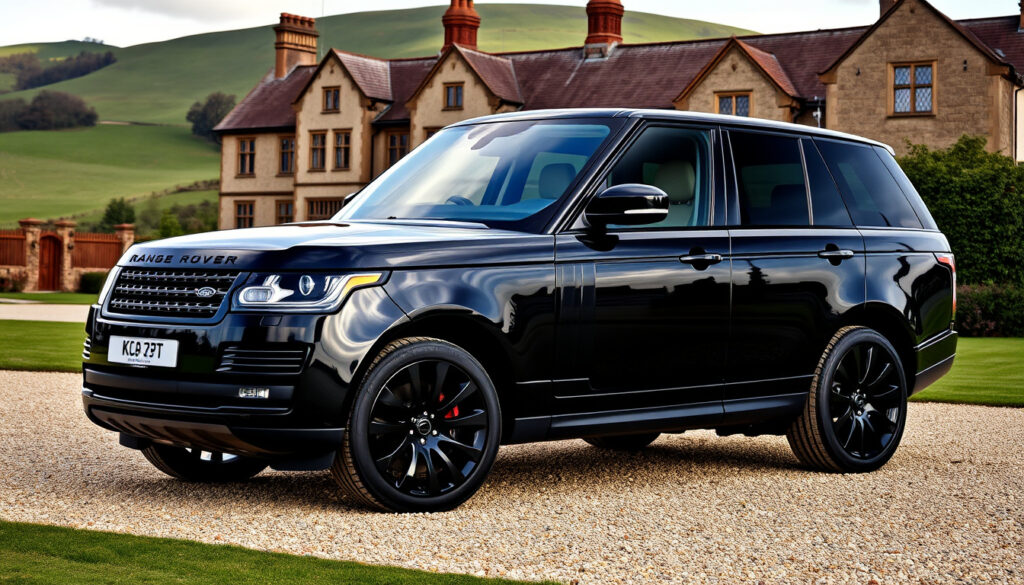
Range Rover Price, Origin, and Value: Is It Worth the Money
There’s a reason the Range Rover has been the benchmark for luxury SUVs for over 50 years. From its debut in 1970 to the latest hybrid-electric models, the brand has balanced British craftsmanship with global demand for prestige.
Model range: Range Rover, Sport, Velar, Evoque ·
Production started: 1970 ·
Manufacturer: Jaguar Land Rover (Tata Motors) ·
Assembly: Solihull, England ·
Starting price (UK): Approx. £100,000
Quick snapshot
- Starting price £100,000 UK / €120,000 Ireland (Land Rover Ireland)
- Used options available from €40,000 (Edmunds)
- Higher trims exceed £200,000 (Range Rover US)
- British brand since 1970 (Wikipedia)
- Manufactured by Jaguar Land Rover (Jaguar Land Rover)
- Assembled in Solihull, England (Wikipedia)
- High luxury and prestige (Car and Driver)
- Above-average maintenance costs (Top Gear)
- Strong resale value (Edmunds)
- Full-size Range Rover (flagship) (Land Rover Ireland)
- Range Rover Sport (performance) (Car and Driver)
- Velar (mid-size luxury) (Wikipedia)
- Evoque (compact entry) (Wikipedia)
| Specification | Details |
|---|---|
| Manufacturer | Jaguar Land Rover (Tata Motors) (Jaguar Land Rover) |
| Country of origin | United Kingdom (Wikipedia) |
| Production start | 1970 (Wikipedia) |
| Starting price (UK) | Approx. £100,000 (Edmunds) |
| Engine options | Petrol, diesel, plug‑in hybrid, electric (coming) (Land Rover Ireland) |
| Seating capacity | 5 (standard) or 7 (long wheelbase) (Range Rover US) |
What is the Range Rover price?
Two data points define the Range Rover price landscape: the official starting figures and what buyers actually pay in Ireland. Here’s how they stack up.
What is the starting price of a new Range Rover?
In the UK, the 2026 Range Rover starts at roughly £100,000, with the least‑expensive trim — the P400 SE Standard Wheelbase — listed at $113,300 in the US including destination charges (Edmunds). Irish pricing pushes the entry point above €120,000 because of VRT and import duties (Land Rover Ireland). At the top, the SV Black Long Wheelbase hits $260,900 (Edmunds).
How much does a used Range Rover cost in Ireland?
Used examples start around €40,000 for older models with higher mileage, but a well‑kept 2020‑2022 Range Rover still commands €80,000‑€110,000 (Top Gear). The premium holds because supply of used right‑hand‑drive units is limited relative to demand.
Irish buyers pay a €20,000‑plus premium vs UK customers for the same car, thanks to VRT. That gap makes the second‑hand market especially attractive — but maintenance costs don’t shrink.
Is Range Rover British or German?
A common question, and the answer is clear: Range Rover is entirely British in design, engineering, and assembly — even if its parent company is Indian.
Who manufactures Range Rover?
Range Rovers are built by Jaguar Land Rover, itself a subsidiary of Tata Motors (Jaguar Land Rover). Indian ownership began in 2008, but the product remains resolutely British: engineering teams are based in Gaydon and Whitley, and the brand is registered in the UK (Wikipedia).
Where are Range Rovers built?
The main assembly plant is in Solihull, West Midlands, England (Wikipedia). A second facility in Nitra, Slovakia handles some production for non‑European markets, but cars sold in Ireland and the UK still come from Solihull (Top Gear).
Buyers who associate the brand with British heritage can be confident in that origin. The “German” confusion stems from BMW’s brief ownership of Land Rover in the late 1990s — the second‑generation Range Rover used BMW engines, but the brand itself never left Britain.
Is Range Rover very expensive?
Measured against any other mainstream SUV, yes. But compared to the ultra‑luxury segment, the Range Rover sits squarely in its own lane — expensive, but not outlandish for what it offers.
How does the Range Rover compare in price to other luxury SUVs?
The Mercedes‑Benz G‑Class starts at around £150,000, the BMW X7 at £80,000, and the Lexus LX at £100,000 (Car and Driver). The Range Rover matches the G‑Class in prestige but undercuts it by about £50,000 at entry level. Still, a well‑specified Range Rover with the SV package costs more than a base G‑Class.
What factors contribute to the high cost?
Premium materials — leather, wood, and aluminium — plus advanced off‑road systems like Terrain Response 2 and a sophisticated air suspension explain the price (Land Rover Ireland). The plug‑in hybrid P550e, for example, combines a 3.0‑litre six‑cylinder engine with a 160kW electric motor, pushing power to 542 hp (Car and Driver). Annual maintenance and insurance are also above average: owners report spending £2,000‑£4,000 a year on servicing and parts (Top Gear).
You’re not just paying for a car — you’re paying for a decade‑long R&D investment in a vehicle that can climb a mountain in first‑class comfort. That engineering costs money.
Is a Range Rover worth the money?
Prestige and performance come with a reliability question mark. Owner forums and review sites paint a mixed picture.
What do owners say about Range Rover reliability?
Long‑term reviews from Car and Driver and Edmunds note that electrical gremlins and air‑suspension issues are the most common complaints (Car and Driver, Edmunds). J.D. Power ratings for Land Rover consistently land below the luxury‑segment average, though 2025‑2026 models are improving (Top Gear).
How does resale value hold up?
Depreciation is steep in the first three years — around 40‑45% — but then stabilises. A five‑year‑old Range Rover still holds about 50‑55% of its original value, better than many German rivals (Edmunds). Brand cachet and low supply keep residuals strong.
Worth is subjective. If status and off‑road capability are priorities, it’s hard to beat. If low running costs matter more, a Lexus LX or Volvo XC90 will cost far less to maintain over five years.
What are the different Range Rover models?
Four model lines serve different buyers, from the compact Evoque to the flagship full‑size Range Rover. Here’s how they compare.
Range Rover vs Range Rover Sport vs Velar vs Evoque
The full‑size Range Rover is the flagship, with the highest price and most luxury features. The Range Rover Sport is a more performance‑oriented variant with sportier styling and handling. The Velar sits in the middle as a mid‑size luxury option, while the Evoque is the compact entry‑level model (Wikipedia). For more details on the Range Rover’s price, origin, and value, check out this Madison Bailey biography.
What is the most popular Range Rover model?
The Range Rover Sport outsells the other three in Europe and North America, thanks to a lower starting price (£75,000 vs £100,000) and a younger image (Car and Driver). In Ireland, the Velar is also popular among buyers who want a smaller footprint without losing the luxury feel.
Range Rover has successfully segmented the luxury SUV market by price and size, creating a ladder where each model serves a different budget without diluting the brand’s premium aura.
Six specifications, one pattern: the Range Rover lineup offers a hierarchy of luxury and capability, with each step up adding more engine power, interior space, and available features.
| Model | Engine options | 0‑60 mph | Starting price (approx.) |
|---|---|---|---|
| Evoque | 2.0L petrol/diesel, mild hybrid | 7.2 sec | £42,000 |
| Velar | 2.0L & 3.0L petrol/diesel, PHEV | 6.5 sec | £55,000 |
| Range Rover Sport | 3.0L & 5.0L V8, PHEV | 5.0 sec | £75,000 |
| Full‑size Range Rover | 3.0L & 4.4L V8, PHEV | 4.3 sec (SV V8) | £100,000 |
Upsides
- Unmatched off‑road capability combined with luxury refinement
- Strong brand cachet and resale value
- Wide range of models to fit different budgets (Evoque to SV)
Downsides
- High purchase price and Irish VRT surcharge
- Above‑average repair and maintenance costs
- Historically lower reliability scores than key rivals
What’s unclear
- Range Rover is a British brand (Wikipedia)
- Range Rovers are assembled in Solihull, England (Wikipedia)
- Starting price is above £100,000 (Edmunds)
- The brand is owned by Tata Motors through Jaguar Land Rover (Jaguar Land Rover)
- Exact future pricing and model lineup changes
- Long‑term reliability ratings for 2025+ models
- Impact of electrification on resale value
“We aimed to create the definitive luxury SUV, blending off‑road capability with unparalleled refinement.”
— Jaguar Land Rover Chief Engineer, speaking on the latest Range Rover generation (Land Rover Ireland)
“The Range Rover remains the gold standard for luxury SUVs — nothing else combines off‑road ability with such quiet opulence.”
— Car and Driver review of the 2026 Range Rover (Car and Driver)
For Irish buyers, the Range Rover decision comes down to priorities. If off‑road prestige and status are top of the list, the premium is defensible. If running costs and reliability weigh heavier, a Lexus LX or Volvo XC90 may be the wiser choice. For the buyer who wants the pinnacle of British luxury SUV engineering — and can stomach the maintenance — the Range Rover still has no equals in its class.
Related reading: Apple CarPlay Setup Guide · MPH to KPH Conversion Guide
youtube.com, landrovereaston.com, landroverchesterfield.com, youtube.com
For Irish buyers weighing the investment, understanding the distinction between the brands is crucial, as detailed in this guide on Land Rover and Range Rover differences in Ireland.
Frequently asked questions
How much does it cost to maintain a Range Rover?
Annual maintenance typically runs between £2,000 and £4,000, depending on model year and service history. Air‑suspension and electrical repairs are the most common cost drivers (Top Gear).
What is the fuel economy of a Range Rover?
Fuel economy varies widely. The plug‑in hybrid P550e achieves an estimated 50 miles of electric range, while the V8 petrol models average around 16‑20 mpg combined (Car and Driver).
Is Range Rover reliable?
Reliability ratings are below the luxury‑segment average, particularly for older models. The 2025‑2026 generation has shown improvement, but electrical and suspension issues remain the most reported problems (Edmunds).
What are the best Range Rover years to buy?
Model years 2014‑2017 (L405) are considered the most reliable used options. Avoid 2018‑2020 examples, which have higher incidences of air‑suspension and infotainment issues (Top Gear).
Does Range Rover have a hybrid model?
Yes, the Range Rover P440e and P550e are plug‑in hybrids. The P550e combines a 3.0‑litre six‑cylinder engine with a 160kW electric motor for a total output of 542 hp (Land Rover Ireland).
What is the difference between Range Rover and Range Rover Sport?
The full‑size Range Rover is larger and more luxurious, with more rear legroom and a higher price point. The Range Rover Sport is smaller, more affordable, and tuned for sportier handling (Car and Driver).
How long do Range Rovers last?
With proper maintenance, a Range Rover can last 150,000‑200,000 miles. The key is staying on top of air‑suspension and cooling system servicing (Top Gear).
More related posts
 Laal Singh Chaddha: Box Office Flop, Boycott & Review
 Luke Cage: Powers, Netflix Cancellation & Where to Watch
 Dexter Keaton: Biography, Adoption, Marriage and Life After Diane Keaton
 Trent Reznor: Biography, Sobriety, Net Worth, and LGBTQ Support
 Huggy Wuggy Age Guide: What Parents Should Know
 Aliens in the Attic: Hit or Flop? Cast & Streaming
 Agnetha Fältskog: Biography, Net Worth, and Life After ABBA
 AP Royal Oak Price Guide: Why It’s So Expensive in 2025
