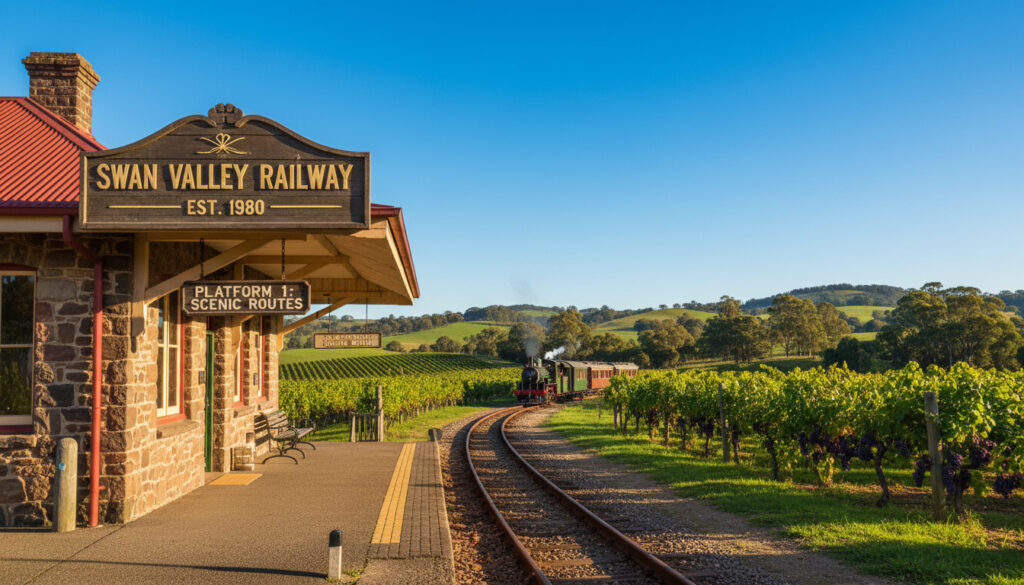
Swan Valley Station – Access Facts History Guide
Contrary to common search queries, no dedicated Swan Valley Station operates within Western Australia’s premier wine region. The historic Swan View railway station, located approximately 15 to 20 kilometres southeast of central Swan Valley wineries, closed in 1966 and now serves exclusively as a heritage site within John Forrest National Park.
Visitors seeking rail access to the Swan Valley face a significant gap in public transport infrastructure. While the region attracts substantial tourism traffic, no train station or bus interchange bears the name “Swan Valley Station,” nor does any direct rail link connect Perth’s metropolitan network to the vineyard district.
This examination clarifies the confusion surrounding station nomenclature, traces the history of the nearby Swan View railway infrastructure, and establishes what transport options actually exist for travellers heading to the valley.
Key Facts About Accessing Swan Valley
No operational railway station exists within Swan Valley boundaries.
Swan View station (closed 1966) lies 15–20 km southeast of wineries.
The 340.7 m Swan View Tunnel served as the historic line’s control point.
Site forms part of the John Forrest Heritage Trail; no train services.
- Swan Valley has no dedicated train station, bus station, or transport interchange bearing its name.
- The nearest historic rail infrastructure, Swan View railway station, ceased operations in 1966.
- The Swan View Tunnel was Western Australia’s only rail tunnel until 1999.
- Gold discoveries in the 1890s prompted the Eastern Railway deviation that routed through Swan View.
- The tunnel’s steep 1:49 gradient and small diameter caused chronic ventilation issues during steam operations.
- A fatal incident occurred in 1942 when locomotives stalled inside the tunnel due to fume buildup.
- The tunnel and station site now function solely as heritage tourism attractions managed within the national park.
| Fact | Details |
|---|---|
| Entity Name | Swan Valley Station |
| Operational Status | No dedicated station exists |
| Closest Historic Rail | Swan View railway station |
| Coordinates | 31°53′14″S 116°03′37″E (Swan View) |
| Distance to Wineries | 15–20 km (Swan View to central Swan Valley) |
| Closure Date | 1966 (station); 1954 (passenger services) |
| Tunnel Length | 340.7 metres |
| Tunnel Gradient | 1:49 |
| Construction Period | 1894–1896 |
| Current Use | Heritage trail (pedestrian only) |
History of Swan Valley Transport Links
The Eastern Railway and Gold Rush Era
The original Eastern Railway line opened in 1884, connecting Guildford to Chidlow with gradients as steep as 1:30. Gold discoveries in the 1890s dramatically increased rail traffic, rendering the steep route operationally inadequate for heavy freight and passenger loads heading to the eastern goldfields.
Engineer C.Y. O’Connor managed the construction of a deviation through the Jane Brook valley, aiming to reduce the gradient and improve efficiency. This project necessitated tunneling through the Darling Scarp, creating the infrastructure that would later be associated with the Swan View area.
Construction of the Swan View Tunnel
Construction on the Swan View Tunnel began in 1894. The bores met on 18 April 1895, and the tunnel officially opened on 22 February 1896, with the full Mundaring Loop line commencing operations on 1 July 1896.
Measuring 340.7 metres in length, the tunnel represented a significant engineering achievement for Western Australia, remaining the state’s only rail tunnel until 1999. The Swan View railway station controlled tunnel operations and appeared frequently in promotional photography for the Western Australian Government Railways, including material featuring The Westland train service.
The tunnel replaced the steeper Helena Valley route with a gentler 1:49 gradient alignment. However, the combination of steep grade, small diameter, and limited ventilation created hazardous conditions for steam locomotive operations that persisted throughout the structure’s active service life.
Operational Challenges and Closure
The tunnel’s design flaws became evident as locomotive weights increased. On 22 January 1942, two locomotives stalled inside the tunnel due to smoke and fume buildup. Driver Tom Beer died in the incident, and the train wreckage was diverted to a spur line.
Passenger services on the Mundaring Branch terminated at Sawyers Valley in early 1954. With the opening of the Avon Valley route in 1966, the Eastern Railway became redundant, and Swan View station closed permanently that same year.
Why Visitors Search for a Swan Valley Station
Tourism Demand and Transport Gaps
The Swan Valley wine region generates significant visitor interest, yet official transport integration remains limited. Search data indicates persistent queries for direct rail access, reflecting a disconnect between tourism marketing and existing infrastructure. No dedicated public transport station serves the winery district, creating confusion among travellers expecting metropolitan-style connectivity.
Nomenclature Confusion
The similarity between “Swan Valley” and “Swan View” contributes to misinformation. While Swan View lies within the broader Shire of Mundaring and connects historically to the valley via the Eastern Railway, it sits 15–20 kilometres from the main winery precincts. The defunct station’s continued appearance in historical records and heritage tourism materials may reinforce the mistaken belief that active rail service exists.
Current Access Realities
No operational facilities, timetables, or parking exist at the historic Swan View site. The location now functions exclusively as a heritage walking trail within John Forrest National Park, offering no practical transport utility for winery visitors.
Planning Your Trip to the Region
No operational railway station exists within Swan Valley. The historic Swan View station has been disused since 1966 and is accessible only as a heritage walking trail. Visitors requiring public transport should verify current bus services from Midland or Bassendean independently, as no integrated station facilities exist.
Travellers should verify current Transperth schedules for services to Midland or Bassendean on the Midland Line, though specific connecting services to Swan Valley wineries were not detailed in available sources. Driving remains the most reliable access method for reaching specific cellar doors and attractions scattered across the region.
Those interested in railway heritage can access the Swan View Tunnel via the John Forrest Heritage Trail, though this requires private transport to the trailhead as no shuttle service operates from the defunct station site. For those planning extended stays or self-catering accommodation, supplies and equipment such as a Rice Cooker Kmart – Best Models Prices Reviews may prove useful for apartment-style winery lodgings.
Chronology of Rail Development Near Swan Valley
- : Eastern Railway opens from Guildford to Chidlow with steep 1:30 gradients.
- : Construction begins on the Swan View Tunnel deviation to address gradient issues.
- : Tunnel bores meet in the middle of the Darling Scarp.
- : Swan View Tunnel opens to rail traffic.
- : Full Mundaring Loop line commences operations, with Swan View station controlling tunnel access.
- : Fatal incident occurs inside the tunnel when locomotives stall from fume buildup, killing driver Tom Beer.
- : Passenger services on the Mundaring Branch terminate at Sawyers Valley.
- : Swan View station closes following the opening of the Avon Valley route, which renders the Eastern Railway redundant.
Is There a ‘Swan Valley Station’?
Established Information
- No railway station, bus station, or transport interchange named “Swan Valley Station” exists within the Swan Valley region.
- The historic Swan View railway station closed in 1966 and lies approximately 15–20 kilometres from central Swan Valley wineries.
- The Swan View Tunnel and station site form part of the John Forrest Heritage Trail, accessible to pedestrians only.
- The tunnel was Western Australia’s only rail tunnel until 1999, measuring 340.7 metres with a 1:49 gradient.
Information Remaining Unclear
- Specific current bus routes and frequencies connecting Midland or Bassendean stations to individual Swan Valley wineries.
- Official visitor statistics for the Swan Valley region and the heritage trail site.
- Future public transport infrastructure plans or proposals for direct rail or bus station development within the valley.
The Historical Significance of the Swan View Infrastructure
The Swan View Tunnel and its associated station represent a pivotal era in Western Australian transport history. Managed by the renowned engineer C.Y. O’Connor during the gold rush period, the infrastructure facilitated the movement of people and goods between Perth and the eastern goldfields. The deviation through the Jane Brook valley replaced the dangerously steep original alignment, though the tunnel’s small diameter and poor ventilation ultimately limited its operational lifespan.
Today, the site serves a different function. As part of John Forrest National Park, the tunnel attracts heritage tourists and rail enthusiasts rather than commuters. Historical records indicate the tunnel features in promotional brochures for the area, though these materials emphasize its heritage value rather than any practical transport utility. The disconnect between this historical infrastructure and modern tourism needs highlights the ongoing transport challenges facing the Swan Valley region.
Official Sources and Expert Records
Swan View lies in the outer Perth suburb along the Jane Brook valley in the Darling Scarp, near John Forrest National Park; not directly in Swan Valley but linked historically via Eastern Railway routes.
— Mundaring History, Shire of Mundaring Records
The tunnel issues included steep 1:49 gradient, small diameter, and poor ventilation causing smoke and fume buildup; feasible for 1890s locomotives but problematic for heavier steam engines.
— Pocket Oz Australian Railway Historical Society
Swan View station controlled tunnel operations in all timetables and served as a key photographic site for WAGR promotions.
— Wikipedia, citing Western Australian Government Railways Archives
Key Takeaways for Travellers
Swan Valley contains no operational train station, bus station, or integrated transport hub. The historic Swan View railway station, located 15–20 kilometres away, closed permanently in 1966 and now functions solely as a heritage site within John Forrest National Park. Visitors should arrange private transport or verify current bus connections from Midland independently, as no direct rail link serves the winery district. Those researching household items for self-catering accommodation might consult guides like Up and Go Woolworths – Prices, Flavours and Stock Guide for provisioning options, though transport to the valley itself requires private vehicle or limited public bus services rather than rail.
Frequently Asked Questions
Is there a train station at Swan Valley?
No. No dedicated Swan Valley Station exists. The historic Swan View station lies approximately 15–20 kilometres away and closed in 1966.
What is the nearest train station to Swan Valley wineries?
Research indicates Midland or Bassendean on the Transperth Midland Line may offer the nearest rail access, though specific connecting services to the valley were not detailed in available sources. Swan View station is the closest historic site but is disused.
Can I visit the Swan View Tunnel?
Yes. The tunnel forms part of the John Forrest Heritage Trail and is accessible to pedestrians. It is not accessible by train.
Why was the Swan View Tunnel built?
Construction began in 1894 to create a gentler gradient deviation from the steep original 1884 Eastern Railway line, facilitating increased traffic during the 1890s gold rush.
When did Swan View station close?
The station closed in 1966 when the Avon Valley route opened, rendering the Eastern Railway redundant. Passenger services had already ended in 1954.
Is there parking at Swan Valley Station?
No operational station exists, therefore no parking facilities are available. The historic Swan View site has no operational parking or access for vehicles intending to catch train services.
How do I get to Swan Valley from Perth by public transport?
Available sources do not specify dedicated bus or train services to Swan Valley. Visitors should check current Transperth schedules for services to Midland and arrange onward transport independently.
What happened in the 1942 tunnel incident?
On 22 January 1942, two locomotives stalled inside the tunnel due to smoke and heat buildup. Driver Tom Beer died, and the wrecked train was diverted to a spur line.
More related posts
 Light Years Noosa: Menu, Reviews, Cocktails & Photos
 Laura Benanti: Biography, Career, and Melania Trump Impersonation
 Howard Lutnick: 9/11, Billionaire, Trump Commerce Secretary
 Dorothy the Dino aur: Who Play Her, Age, and More
 Spencer Leniu: Contract, Thurston Incident, Roosters Future
 Bissell Carpet Cleaner – Best Models Tested 2025
 Cole Mobile Plan 2026: Coverage, Pricing & Pro /Con
 Budget Pet Products – Best Affordable Picks for Dogs Cats
