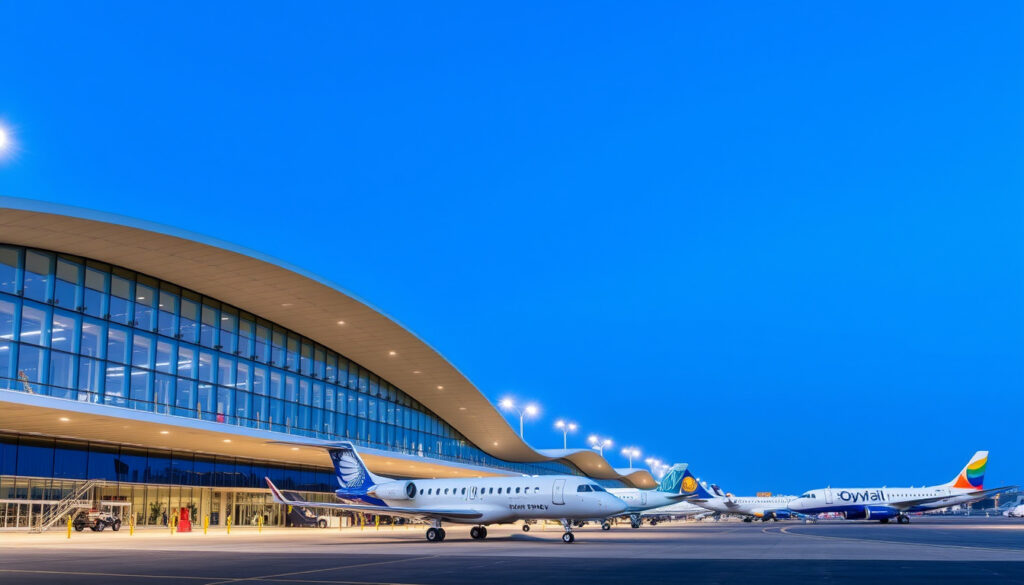
Domestic Airport Sydney: Essential Traveler Guide
Sydney’s domestic terminals (T2 and T3) are compact, purpose-built for domestic volume, and easier to navigate than many international hubs—once you know which terminal your airline uses. This guide cuts through the terminal confusion with official facts on T2 and T3, the real walking times from each car park, and what ID you actually need to board.
Location: Mascot, 9km south of Sydney CBD · Domestic Terminals: T2 and T3 · IATA Code: SYD · Operator: Sydney Airport Corporation · Train Access: Frequent services 5am-midnight
Quick snapshot
- T2 and T3 handle all domestic flights; T1 is international only (iFly.com airport guide)
- No passport required for domestic flights within Australia (iFly.com airport guide)
- Walking transfers between all terminals are possible via clearly signed paths (iFly.com airport guide)
- Whether Jetstar occasionally uses T3 during peak periods remains officially unconfirmed (iFly.com airport guide)
- Real-time security wait times aren’t published on a public dashboard (Sydney Airport official maps page)
- Pre-booking promotions offering up to 70% parking savings are available now (Sydney Airport official parking page)
- Interactive terminal maps updated continuously for T1, T2, T3 (iFly.com terminal maps)
- Check your airline’s website before departure for the exact terminal assignment (iFly.com terminal guide)
- Book parking online at least 24 hours ahead to lock in the best rates (Sydney Airport official parking page)
These verified facts about Sydney’s domestic operation give travelers a reliable baseline before diving into terminal details.
| Fact | Detail |
|---|---|
| Full Name | Sydney Kingsford Smith Airport |
| Domestic Terminals | T2, T3 |
| Address | Mascot NSW 2020 |
| Distance to CBD | 9km south |
| Train Operator | Sydney Trains |
| T2 Status | Largest domestic terminal in Australia |
| P2 Walk Time | 4-5 minutes to terminals |
| P3 Walk Time | 5-8 minutes to terminals |
Which terminal is domestic at Sydney Airport?
Sydney Airport operates three main passenger terminals, and the split is straightforward: T2 and T3 handle domestic flights, while T1 serves international routes. T2 and T3 sit adjacent to each other on the domestic side, making it relatively simple to find your way once you know which one your airline uses.
Sydney domestic flight T1 or T2?
Virgin Australia and Jetstar primarily operate from T2, which is the largest domestic terminal in Australia. Qantas domestic flights depart from T3, located just a short walk away from T2. This arrangement means most passengers flying on Qantas will find their gates in the T3 concourse rather than T2.
If you’re picking up someone from a domestic flight, knowing the airline tells you which terminal to head to. Showing up at T3 when your passenger is landing at T2 means a 5-10 minute walk between terminals.
The implication for travelers: confirm the terminal before you leave home, not after you arrive at the wrong building.
Is Jetstar domestic T2 or T3?
Jetstar operates primarily from T2. However, during high-demand periods, the airline may occasionally use T3 gates. The safest approach is to check your boarding pass or the Jetstar app 24 hours before departure for your confirmed gate terminal. Airport signage throughout the domestic precinct directs passengers to both terminals clearly.
Terminal 1 vs 2 guide
The key distinction is simple: Terminal 1 equals international flights, Terminals 2 and 3 equal domestic flights. If you’re flying anywhere within Australia from Sydney, your departure point is either T2 or T3. Official terminal maps are available for download from the Sydney Airport website.
How long do I need to be at the airport before a domestic flight in Australia?
For domestic flights in Australia, airports and airlines generally recommend arriving 1-2 hours before your scheduled departure. This buffer gives you enough time to check bags, clear security, and find your gate without rushing. However, the exact timing depends on factors like time of day, airline, and how familiar you are with the terminal.
Is 1 hour early enough for a domestic flight?
One hour is cutting it close for most domestic flights, but it can be sufficient under the right conditions. If you’re traveling with carry-on only, have already checked in online, and you’re familiar with the terminal layout, 60 minutes before departure is technically enough for Qantas, Virgin Australia, and Rex flights. That said, factors like early-morning security queues, school holiday crowds, or connecting from another flight can easily eat into that margin.
Budget travelers flying Jetstar should build in extra time—the airline’s budget model means tighter gate management, and missing your slot costs more to rebook with Jetstar than with full-service carriers.
What this means: arriving with a 90-minute buffer is the safer default, especially during school holidays or early morning departures when security queues peak.
Security screening times
Security wait times at Sydney domestic terminals vary significantly throughout the day. Peak periods—typically 6am-8am and 4pm-6pm on weekdays—see the longest queues. The airport authority does not publish real-time security wait data publicly, so arriving with extra time during these windows is the safer bet. Domestic security at T2 and T3 processes passengers relatively quickly once you reach the front of the queue, but the wait in line depends entirely on crowd volume.
Can I walk from domestic to international terminal in Sydney?
Yes, you can walk between all three terminals at Sydney Airport. The paths are clearly signed, and the walking distances are manageable for most travelers. However, the time required varies depending on whether you’re moving between T2 and T3 (adjacent) or crossing from T1 international to the domestic terminals.
Terminal transfers overview
The domestic terminals T2 and T3 are next to each other—a 2-3 minute walk at most. The walk from either domestic terminal to T1 International takes longer: allow 10-15 minutes if moving landside (outside security) or up to 20 minutes airside (through security). The Qantas official transfer map provides detailed guidance for passengers connecting between domestic and international flights.
Transfers between T1 International and the domestic terminals can take up to 1 hour when you factor in re-clearing security, collecting bags if required, and moving between buildings. Budget this time carefully if you’re connecting from an international arrival to a domestic departure.
The pattern: the official transfer time of up to 1 hour accounts for the physical distance between T1 and the domestic terminals, but the real risk comes from mandatory security re-screening at each terminal.
Walking paths and time
There are two ways to transfer between terminals: landside (before security) and airside (after security). The T-Bus service runs between all terminals for a fee if you’d prefer not to walk. Walking paths are covered and climate-controlled for much of the route, making the walk comfortable in most weather. Several shuttle bus companies also operate services from both the international and domestic terminals.
Do I need a passport for a domestic flight in Australia?
No passport is required for domestic flights within Australia. Since there’s no immigration control between Australian cities, you don’t need to show a passport at any point. What you do need is valid identification that proves your identity and citizenship or legal residency status.
Required ID documents
For domestic flights in Australia, passengers aged 18 and over must present one form of government-issued photo identification. Acceptable options include a valid driver’s licence, state-issued photo card, or passport (though a passport is unnecessary for domestic travel). If you’re flying with a Digital ID app approved by your state, check with your airline in advance whether they’ll accept it as your primary ID document.
International students studying in Australia should carry their visa documentation or ImmiCard as a backup, particularly if their primary ID doesn’t clearly indicate their current visa status.
What this means: for most Australian residents, a driver’s licence is all that’s needed—no need to hunt for a passport when a state-issued ID satisfies the requirement.
Qantas and other airline rules
All major Australian carriers—Qantas, Virgin Australia, Jetstar, and Rex—follow the same Identification Requirements set by the Civil Aviation Safety Authority (CASA). The rules don’t vary by airline: passengers 18+ need valid photo ID, children under 18 traveling domestically don’t need ID if accompanied by an adult, and unaccompanied minors have separate documentation requirements. Qantas and Virgin Australia offer dedicated domestic check-in counters at T2 and T3 with staff trained to help with ID queries.
Domestic Airport Sydney Arrivals, Departures, Map and Parking
Beyond the terminals themselves, two practical concerns dominate the domestic airport experience: finding your car when you return, and tracking whether your arrival is on time. Both have official resources that work well when you know how to use them.
Arrivals process
Sydney Airport’s domestic arrivals at T2 and T3 deliver passengers to a dedicated arrivals hall on the ground level. Baggage claim carousels are clearly signed, and flight information displays show which carousel serves your flight. Real-time arrivals information is available through the Sydney Airport website and most airline apps.
Departures check-in
Domestic check-in at T2 and T3 opens 2 hours before departure for most airlines, with online check-in available from 24 hours prior. Self-service kiosks are available for Qantas, Virgin Australia, and Jetstar passengers who have already checked in online and just need to print bag tags. Interactive terminal maps show the exact location of each airline’s check-in zone.
Parking options and map
Three on-site car parks serve the domestic terminals. P2 Domestic Parking sits closest to T2 and T3—just 4-5 minutes’ walk on a covered walkway. P3 Domestic Parking requires 5-8 minutes of walking but offers better rates for multi-day stays. P1 provides short-term parking ideal for quick drop-offs and pick-ups.
This comparison table breaks down each parking option by location, walking distance, and best use case.
| Car Park | Best For | Walk Time to Terminal | Notes |
|---|---|---|---|
| P2 Domestic | Short trips | 4-5 minutes | Closest to T2/T3 |
| P3 Domestic | Few days | 5-8 minutes | Better daily rate |
| P1 | Quick drop-off | 2-3 minutes | Short-stay only |
| Blu Emu | Week+ stays | Shuttle 15 min | Most economical |
The implication for drivers: if you’re leaving your car for a week or more, theBlu Emu shuttle wait pays for itself in savings, but you need to budget the 15-minute shuttle transfer into your travel plan.
For longer stays, the Blu Emu Car Park on Ross Smith Avenue offers the best value, with a free shuttle running every 15 minutes to T2 and T3. The airport’s official parking map shows all car parks including the international terminal options and off-site alternatives.
Pre-booking parking online can save you up to 70% compared to drive-up rates, according to the official Sydney Airport website. The catch: you commit to a specific date and car park. Off-site options like Park on King advertise over 50% savings with shuttle service, but factor in the shuttle wait time against the walking time savings.
The catch for off-site parkers: while Park on King and similar operators undercut on-site rates, their advertised shuttle frequency assumes you arrive on schedule—delays cascade into missed flights.
How to get to Sydney Domestic Airport
Sydney Trains runs frequent services to the airport stations—Domestic Terminal and International Terminal stations—operating from approximately 5am to midnight. The trip from Sydney CBD takes around 15-20 minutes by train. Taxis and rideshares drop off at the front of each terminal, with clear signage directing drivers to the appropriate kerb.
Upsides
- T2 and T3 are adjacent, making terminal navigation straightforward
- On-site parking within walking distance of all gates
- Pre-booking discounts up to 70% available
- No passport needed for any domestic route
- Train access every 5-10 minutes from CBD
Downsides
- T1-to-T2/T3 transfers can take up to 1 hour
- Peak security queues in early morning and late afternoon
- On-site parking rates add up quickly for multi-day trips
- Jetstar terminal assignment can vary during busy periods
- Blu Emu shuttle requires a 15-minute wait buffer
The implication for transport planning: Sydney Trains offers the most predictable journey time from the CBD, while the main risk for drivers is underestimating the cost of on-site parking for multi-day trips.
Steps: Booking domestic airport parking at Sydney
- Check your terminal. Confirm whether you’re departing from T2 (Virgin Australia, Jetstar) or T3 (Qantas) by checking your airline confirmation or app.
- Decide on parking type. For stays under a day, P2 or P1 offer the shortest walks. For multi-day trips, P3 or Blu Emu are more economical.
- Compare rates online. Visit the Sydney Airport official parking page and enter your dates to see pre-booking rates versus drive-up pricing.
- Book at least 24 hours ahead. Pre-booking locks in the lower rate and guarantees a space, especially critical during school holidays.
- Note your car park location. Take a photo of your zone and level—P2 alone spans multiple sections. Keep your booking confirmation accessible on your phone.
- Allow walking time. From P2, plan 4-5 minutes to reach the terminal. From P3, allow 5-8 minutes. Blu Emu users should add the shuttle wait.
Sydney Airport car parks are located within walking distance to the terminals, or a short bus trip away for Blu Emu.
Sydney Airport (Official Site)
Transfers between T1 International and T2/T3 Domestic can take up to 1 hour.
iFly.com (Airport Guide)
For first-time visitors to Sydney’s domestic airport, the setup is more forgiving than many international hubs. T2 and T3 are purpose-built for domestic volume, and the walk from the car parks to the gates is shorter than at comparable airports in Melbourne or Brisbane. The real gotcha isn’t navigation—it’s timing. Budget travelers who skip pre-booking parking and arrive just 60 minutes before departure often find themselves stressed unnecessarily. A little advance planning turns what could be a frantic morning into a smooth departure.
Related reading: Evolution Laser Clinic Sydney
prebook.sydneyairport.com.au, parksy.com, novotelsydneyairport.com.au, scribd.com, parkinglink.com.au, youtube.com, parkonking.com.au, remitly.com
Travelers will find this overview complemented by the terminals, transport and parking guide offering practical insights into transport options and parking at Sydney’s domestic terminals.
Frequently asked questions
Is Sydney International Airport the same as Domestic Airport?
No. Sydney Kingsford Smith Airport has three terminals. T1 handles international flights. T2 and T3 handle domestic flights. All three are on the same airport campus but in separate buildings.
How do I know if my flight is terminal 1 or 2?
Check your boarding pass, airline app, or booking confirmation. Qantas domestic uses T3; Virgin Australia and Jetstar domestic use T2; all international flights use T1. Airport signage throughout the precinct also directs you to the correct terminal.
What is the address of Domestic Airport Sydney?
Sydney Domestic Airport is located at Mascot, NSW 2020. The actual street address for T2 is 1 Bourke Street, Mascot NSW 2020. T3 is at 2 Ross Smith Avenue, Mascot NSW 2020.
Where can I park at Domestic Airport Sydney?
On-site options are P1 (short-stay), P2 (4-5 min walk to T2/T3), and P3 (5-8 min walk). Off-site, Blu Emu offers the cheapest long-stay option with a shuttle every 15 minutes. Pre-booking online at the official site offers savings up to 70%.
How to view Domestic Airport Sydney departures?
Real-time departure information is available on the Sydney Airport website, individual airline apps, or at the flight information displays inside T2 and T3. Most third-party flight trackers also pull live data from the airport’s systems.
What ID is needed for domestic flights under 18?
Children and teenagers under 18 don’t need photo ID to fly domestically in Australia if they’re accompanied by a ticketed adult. Unaccompanied minors require documentation including their booking reference and may need a letter of authority from a parent or guardian.
Are there upgrades at T2 Domestic Terminal?
T2 has undergone upgrades in recent years, including expanded self-service check-in zones and refreshed lounge facilities for Virgin Australia. Qantas operates its domestic lounge separately in T3. Terminal maps on the airport website show the current layout of retail, dining, and lounge options.
More related posts
 Samsung S26 Ultra Release Date: Full Regional Schedule
 Ollie Dempsey: Faith, Family, and AFL Career
 Comparison Car Insurance Quotes – Save Hundreds Yearly
 Peter Dutton News – Latest Updates After Election Defeat
 Scott Pilgrim: LGBTQ Characters, Autism Themes, and Age Gap
 Toy Poodle: Complete Guide for Irish Owners
 Albert Einstein: IQ, Beliefs, Inventions & Life Biography
